
Accordion UI design

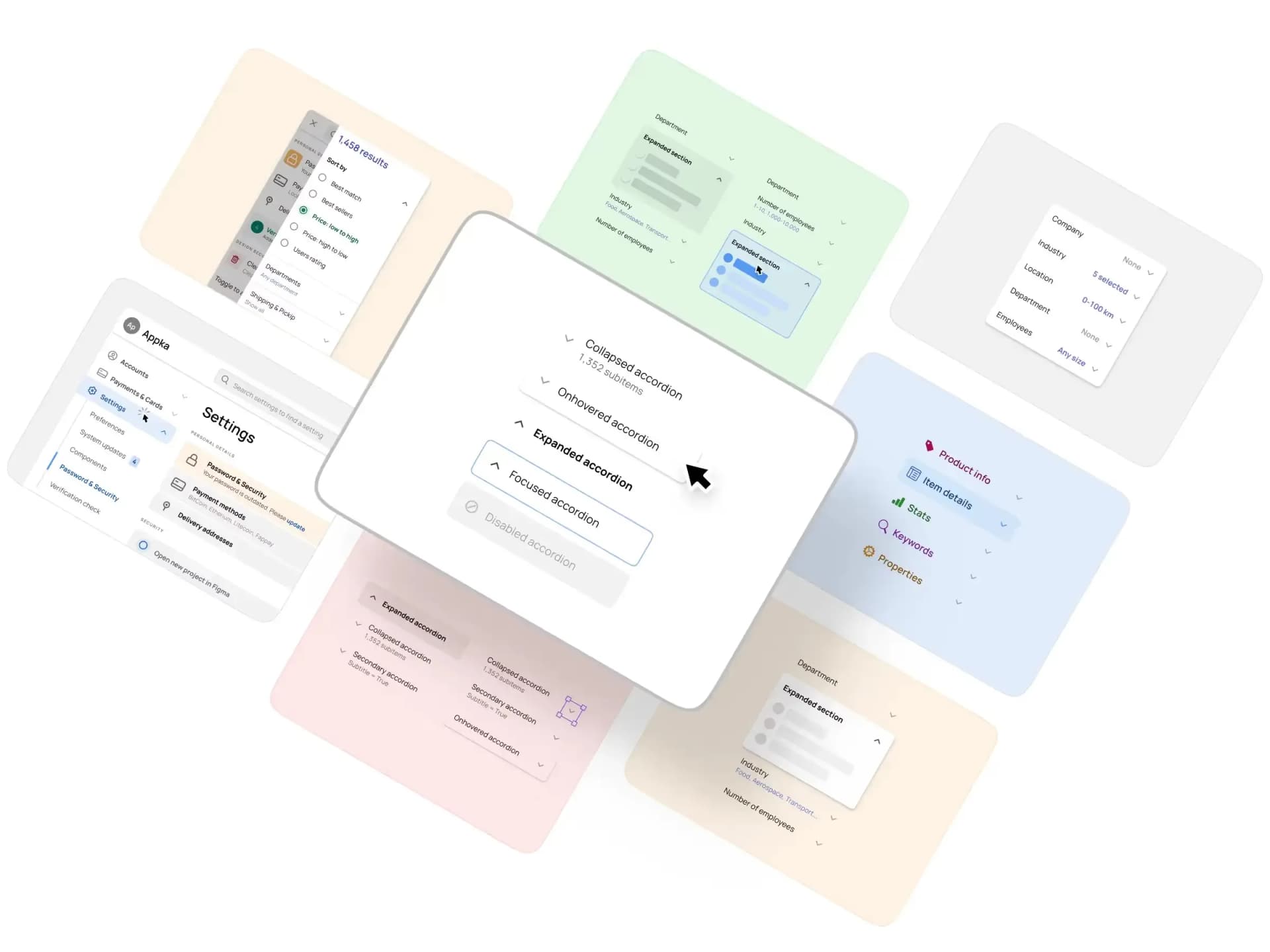
The exploration for Accordion component UI design, states, templates and use cases for desktop & mobile viewports.

Accordion UI design exploration — Styles, states, usage, templates
Tutorials

Published on

September 5, 2021

|

6 mins read

Blog

Accordion UI design

Roman Kamushken

Roman Kamushken

Heya! Roman's here.

I am a UI designer, maker, and seller. It's been already 3+ years passed since I started to make templates for Figma and founded Setproduct to help startups and individuals save on design and release their apps faster.

Working for 20+ years in graphic design, last years I've been browsing thousands of apps, screens, components, and layouts almost DAILY to gather the most complete ebook of how to design components, templates, and entire apps.

Fortunately, I've started with the 1st chapter related to the State of Avatar. Glad I was listed on some popular design resources and got a bunch of retweets and mentions. Which makes me decide to continue my explorations, so meet the research aimed to explain on how to design Accordions.

What is Accordion?

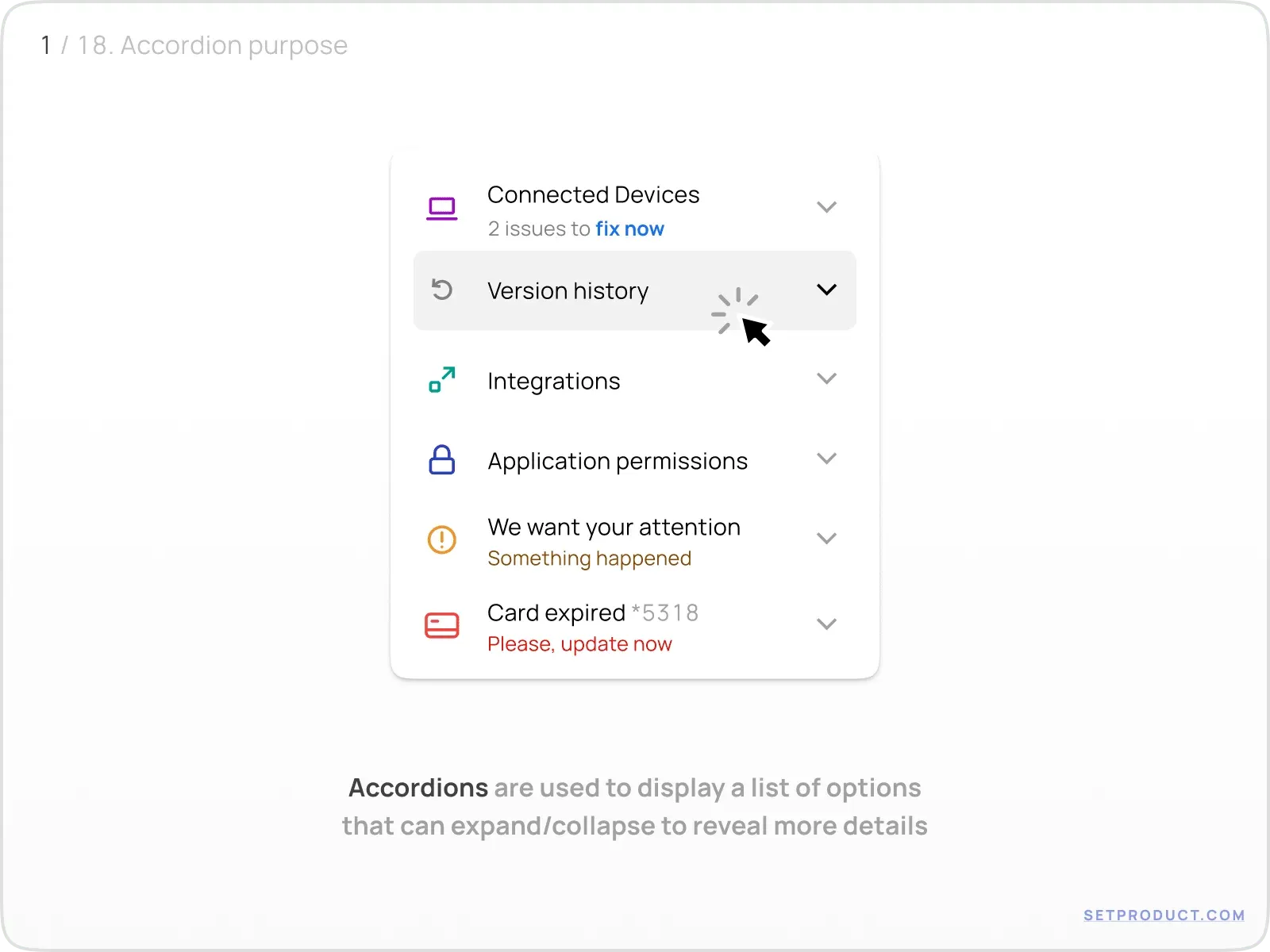
Accordion (aka Expansion panel) — vertically stacked list of options that can expand/collapse to reveal or hide more associated content.
Accordion UI design tips

Anatomy

States

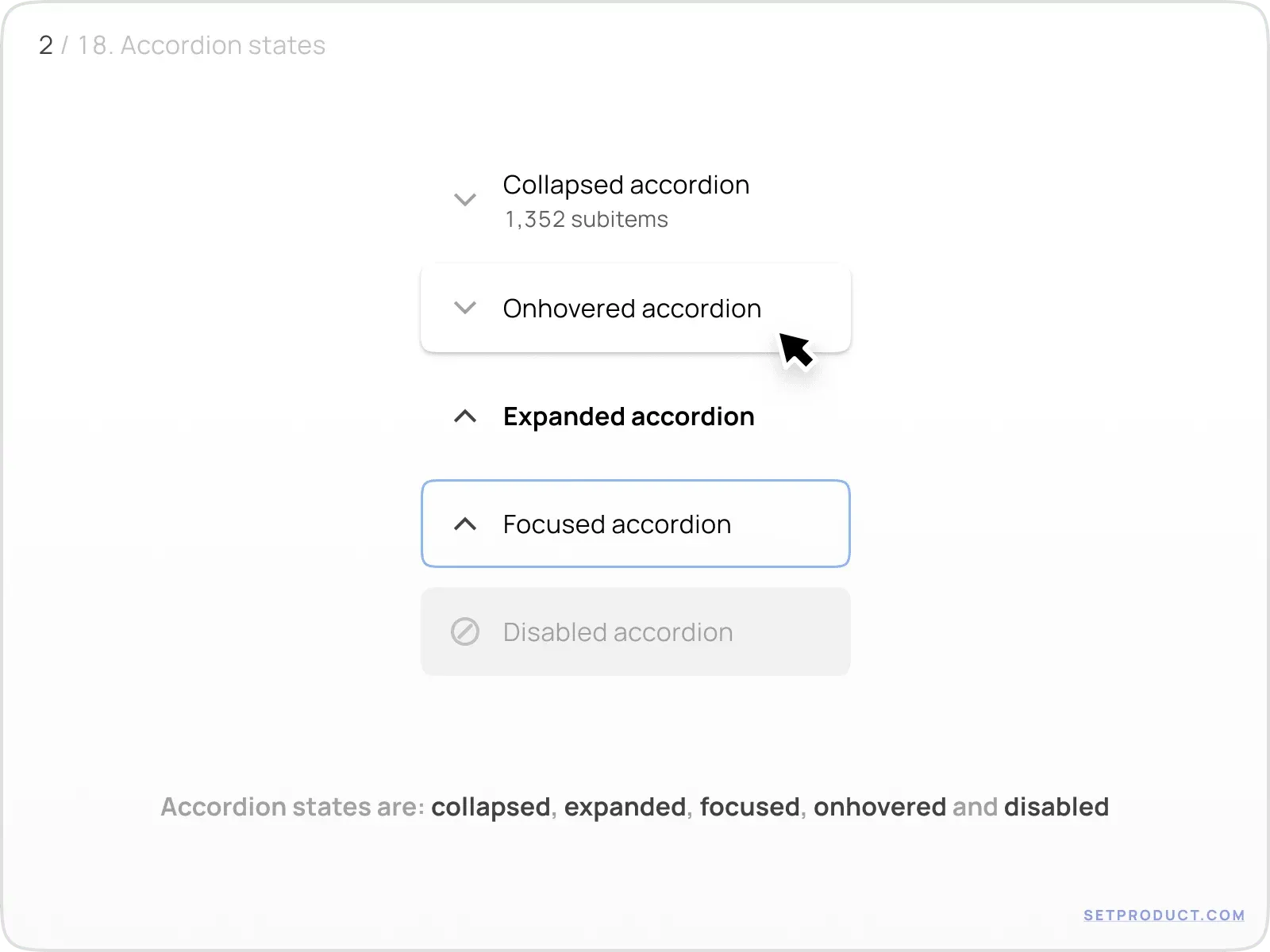
Default states for Accordion are:

  • collapsed
  • expanded
  • onhovered
  • focused
  • disabled

Accordion UI design tips

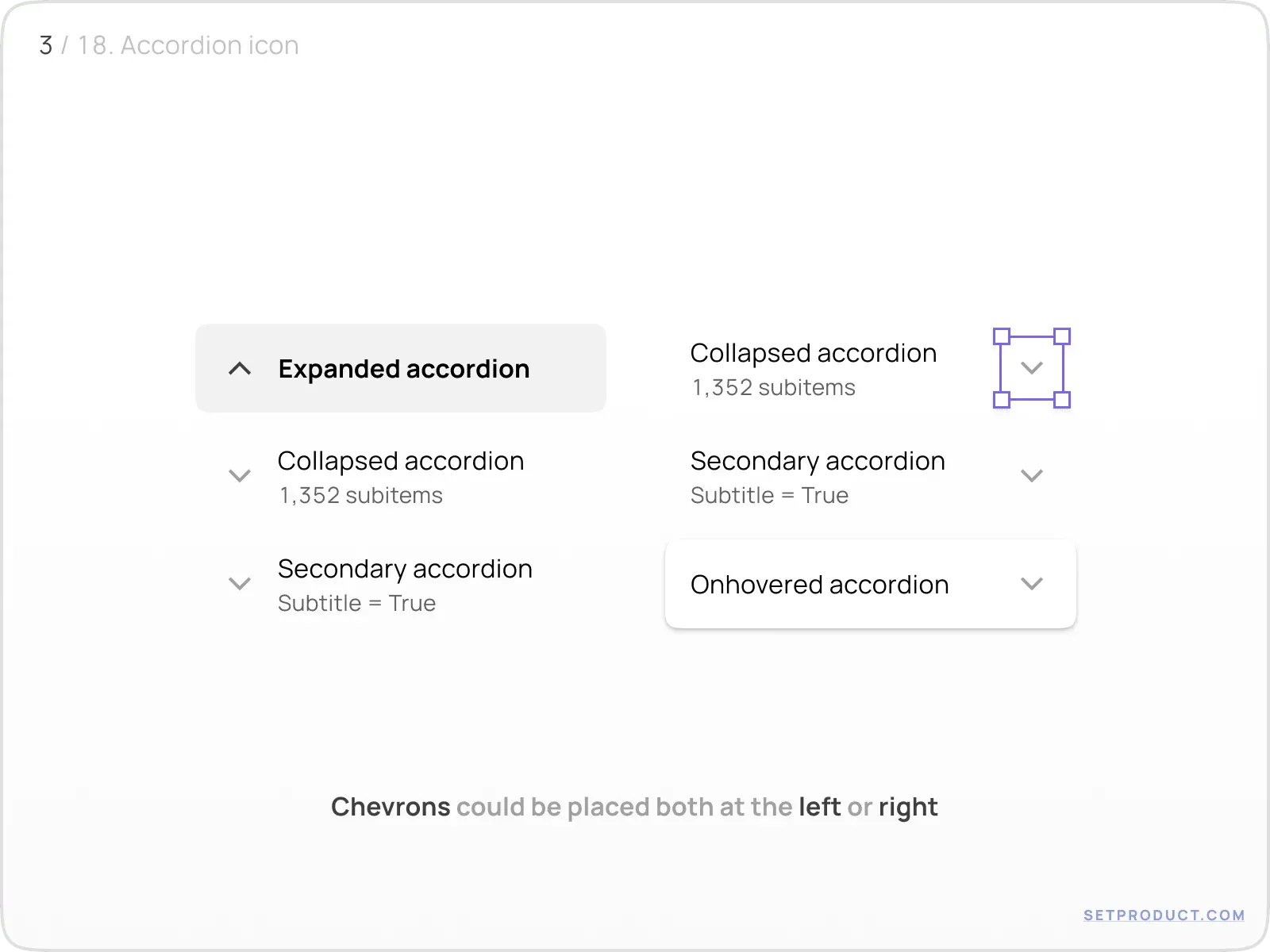
Chevrons placement

Chevron icon represents the opportunity to expand/collapse Accordion item. Once Accordion was clicked, the chevron rotates to indicate the successful expansion. Further collapse returns the chevron to a previous position.
Accordion UI design tips

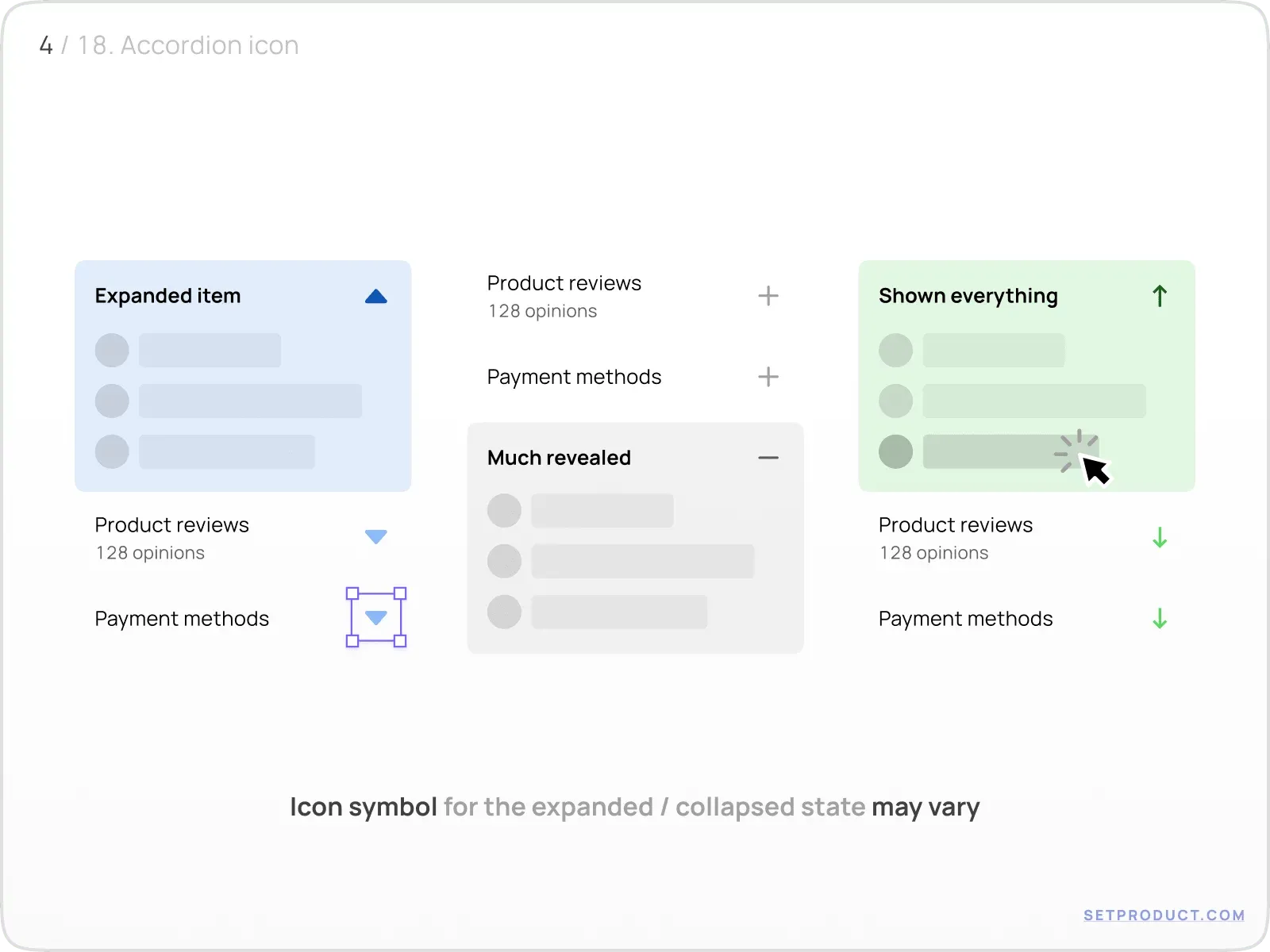
Instead of a chevron, you may use the following symbols:

  • Up / down caret
  • Plus / Minus
  • Up / down arrow

Accordion UI design tips

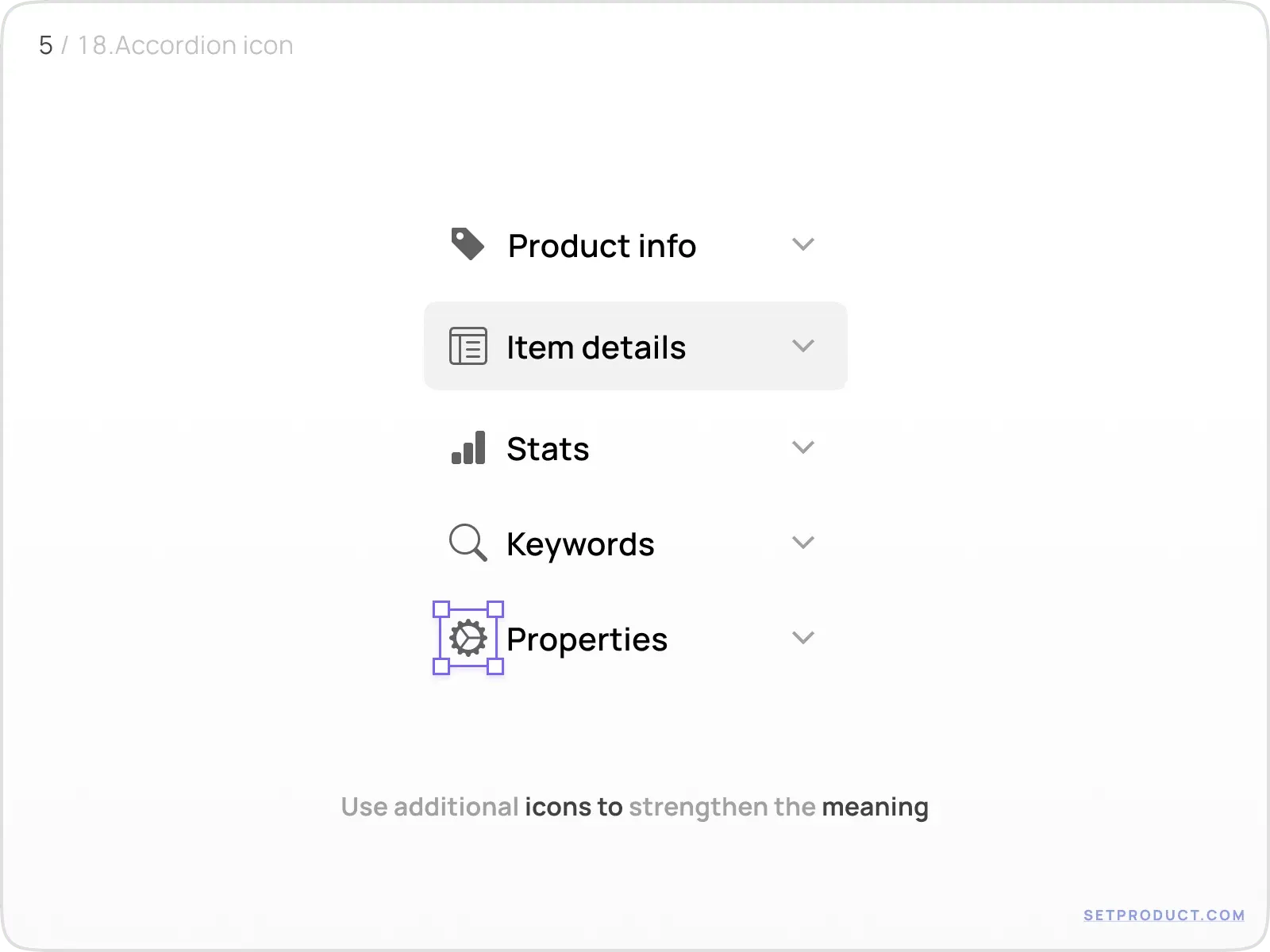
Additional icon

In the case of right-sided Accordion, you may place additional icons to strengthen the meaning. Use wisely not to overload the component.
Accordion UI design tips

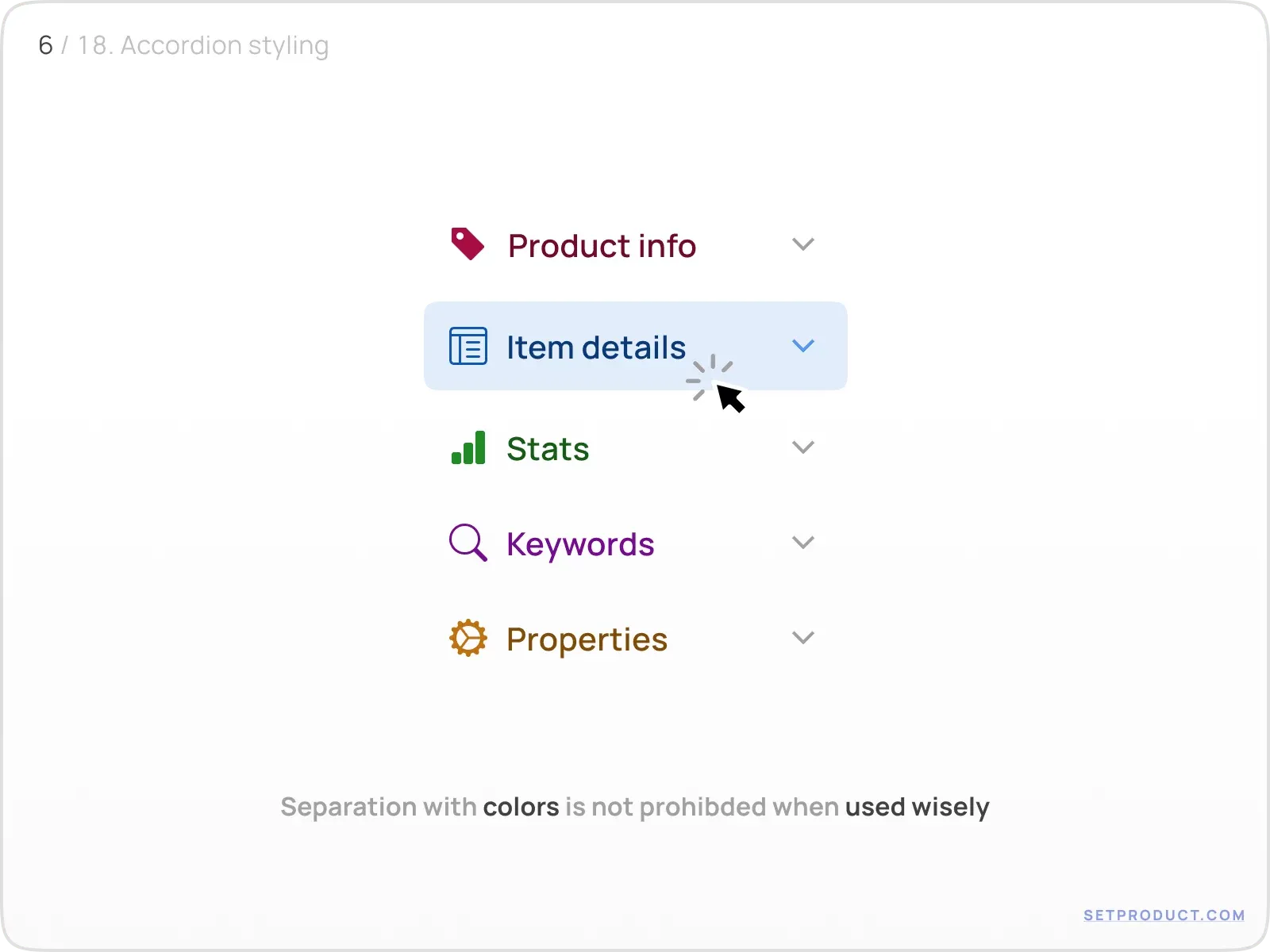
In some cases, you may apply colors to visually separate the items:
Accordion UI design tips

Styles & Themes

Expanded item

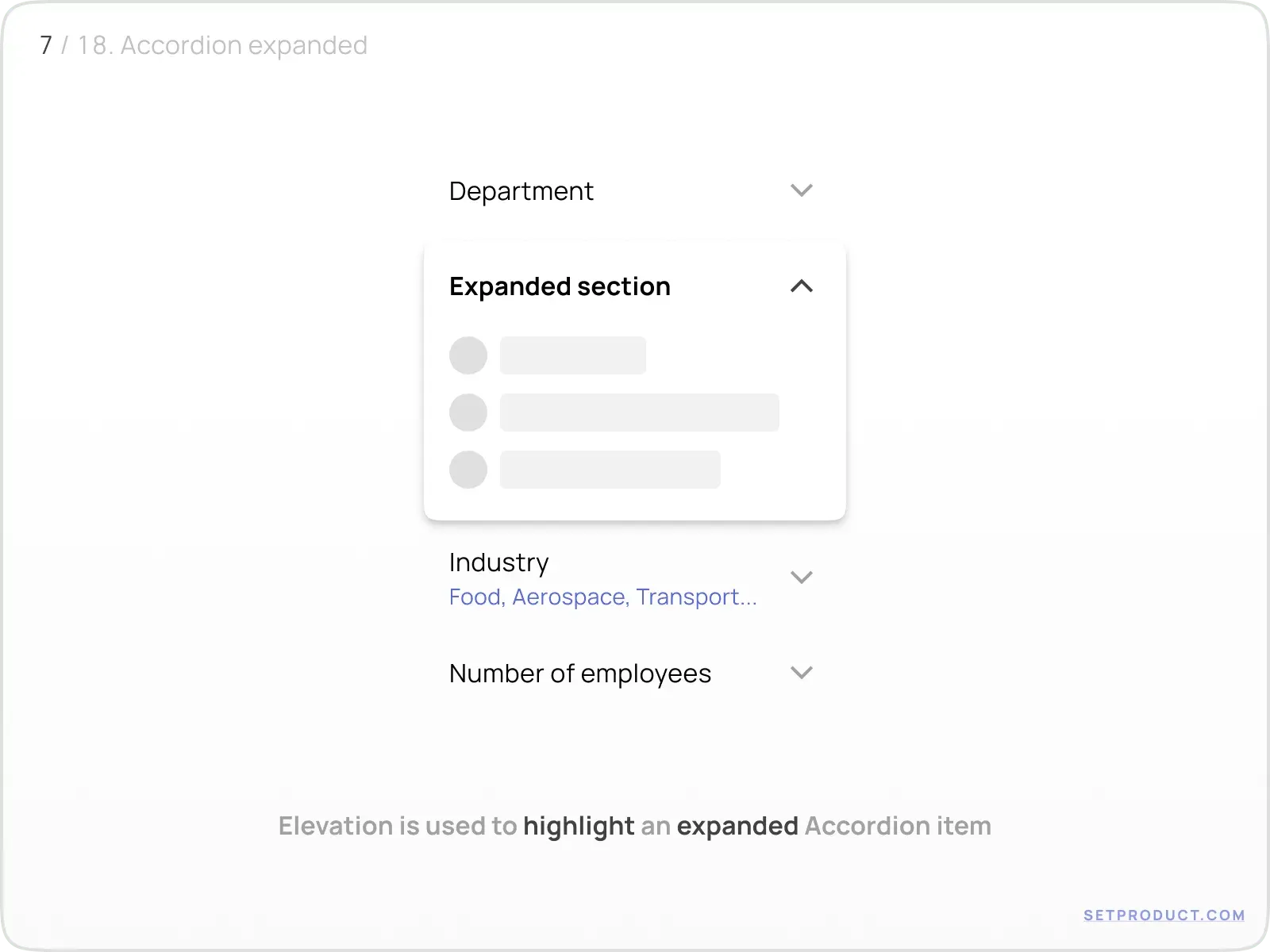
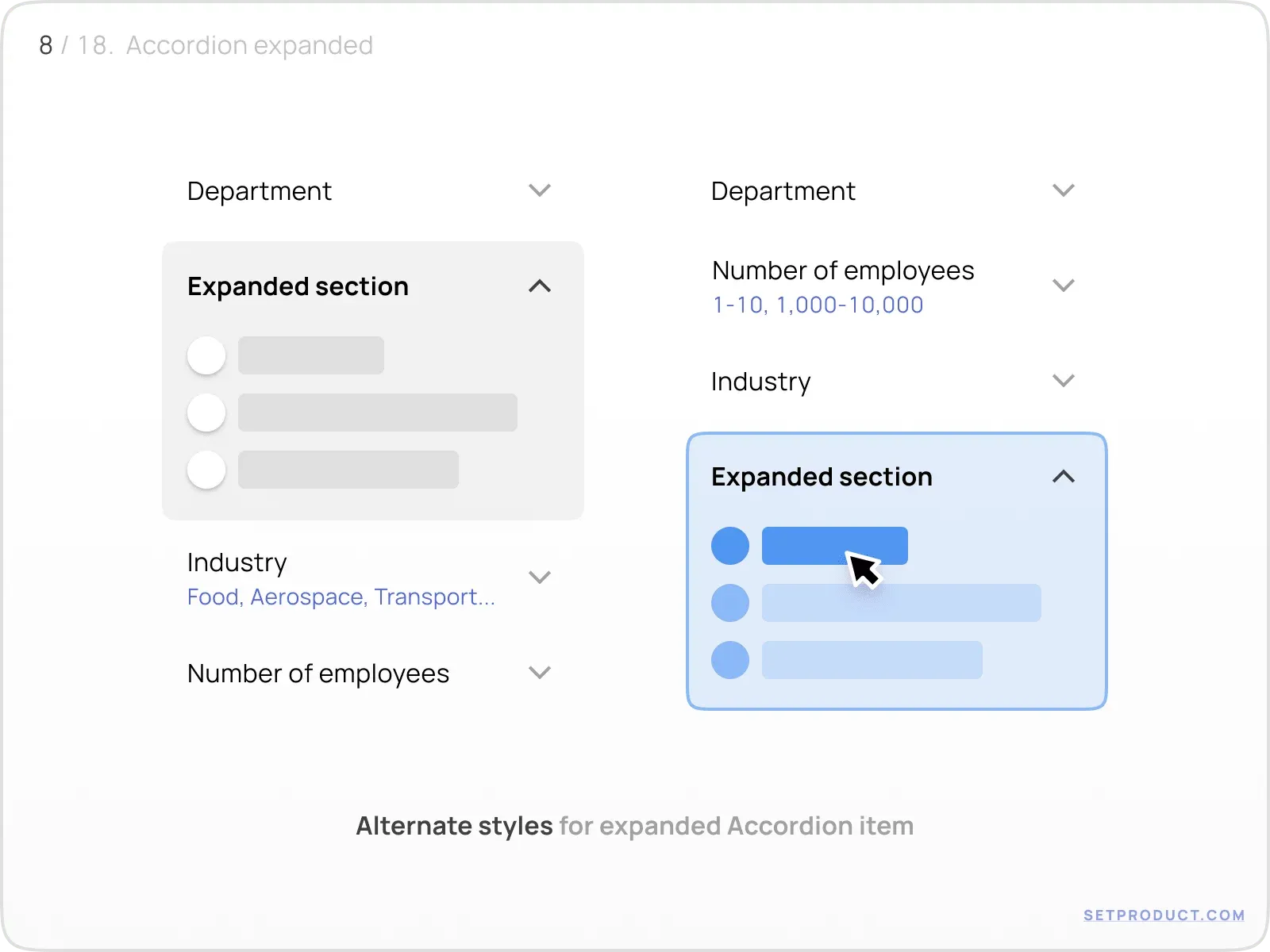
Highlight expanded state to let a user recognize what is opened in case of multiple Accordions. There are several possible styles for the highlighting:

  • Elevation shadow
  • Background fill
  • Outline stroke

Accordion UI design tips

While the elevation works well on both smooth grey and white surfaces, you may fill the Accordion expanded item's background with 8–12% opacity fill. Fits good for white surfaces. Add outline stroke, if necessary.
Accordion UI design tips

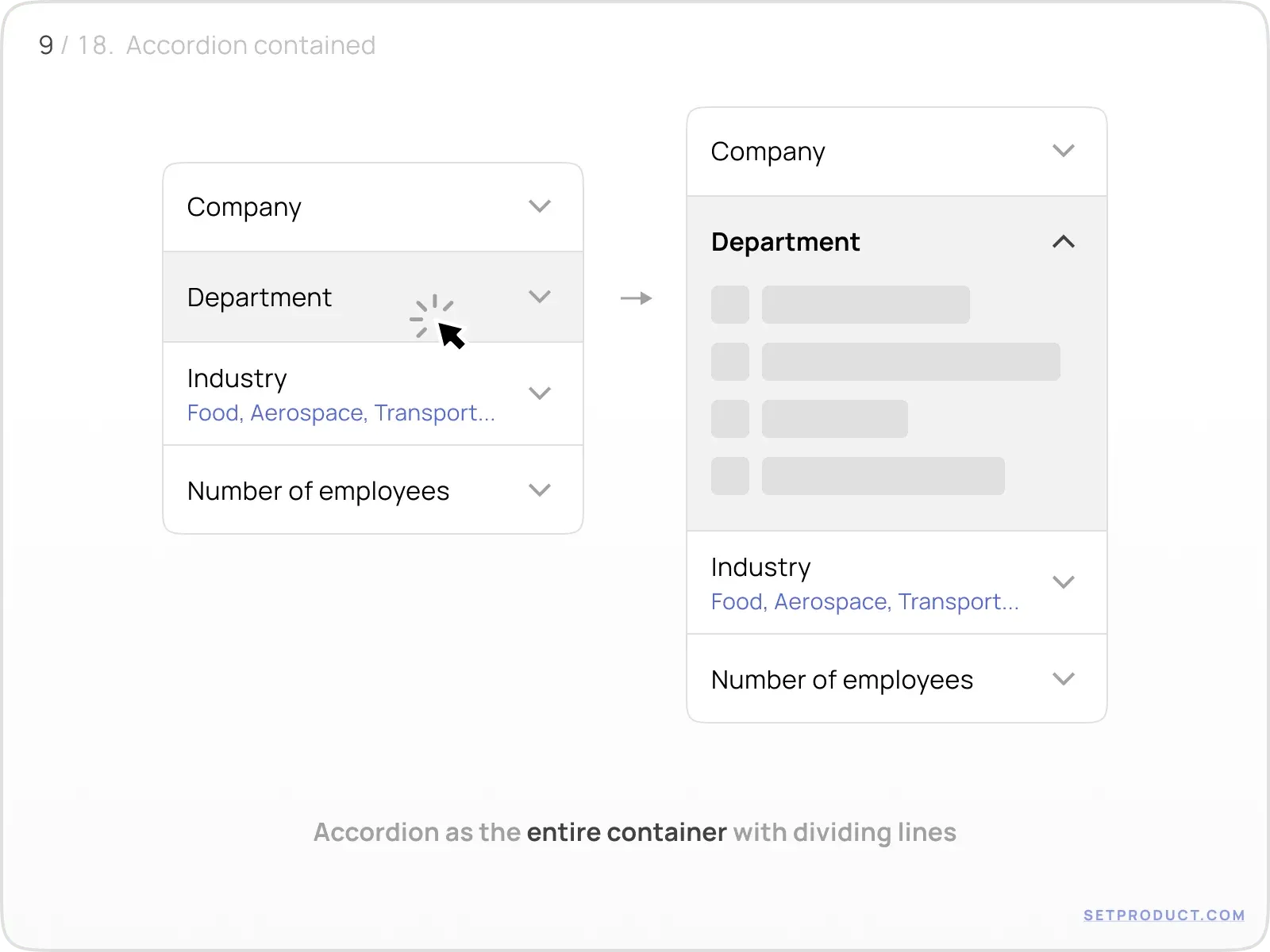
Contained Accordion

Use contained Accordion for most of the cases. Separate its items by a slightly visible divider. This placement either saves some vertical space.
Accordion UI design tips

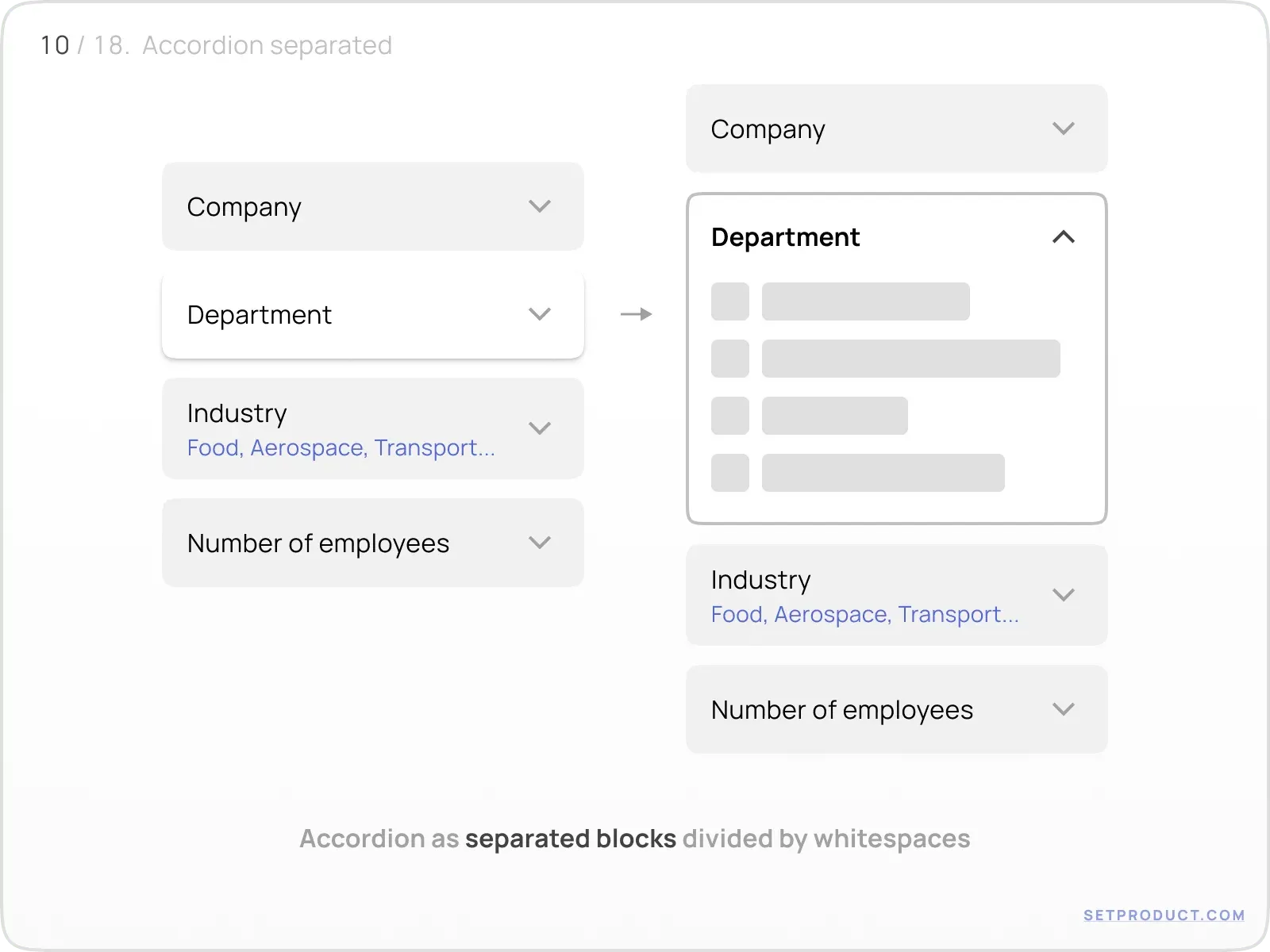
Separated Accordion

There are some cases when you can separate Accordions with whitespace. Use this method to divide when it's needless to save vertical space.
Accordion UI design tips

Accordion UX & Usability

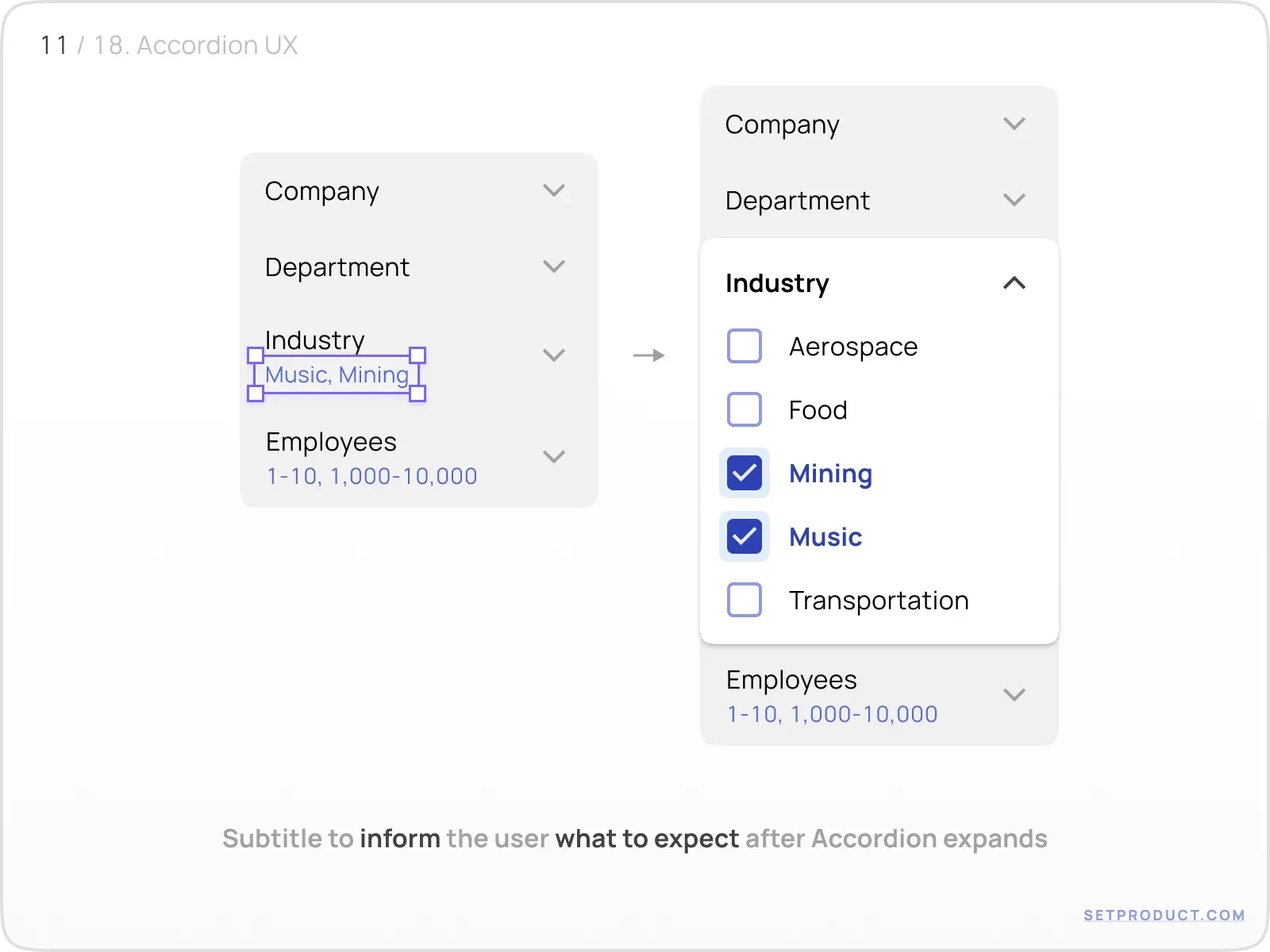
Subtitle to pre-know

Enable a subtitle to inform your users about what to expect when Accordion expands. This either helps to display the user's pick when everything is collapsed.
Accordion UI design tips

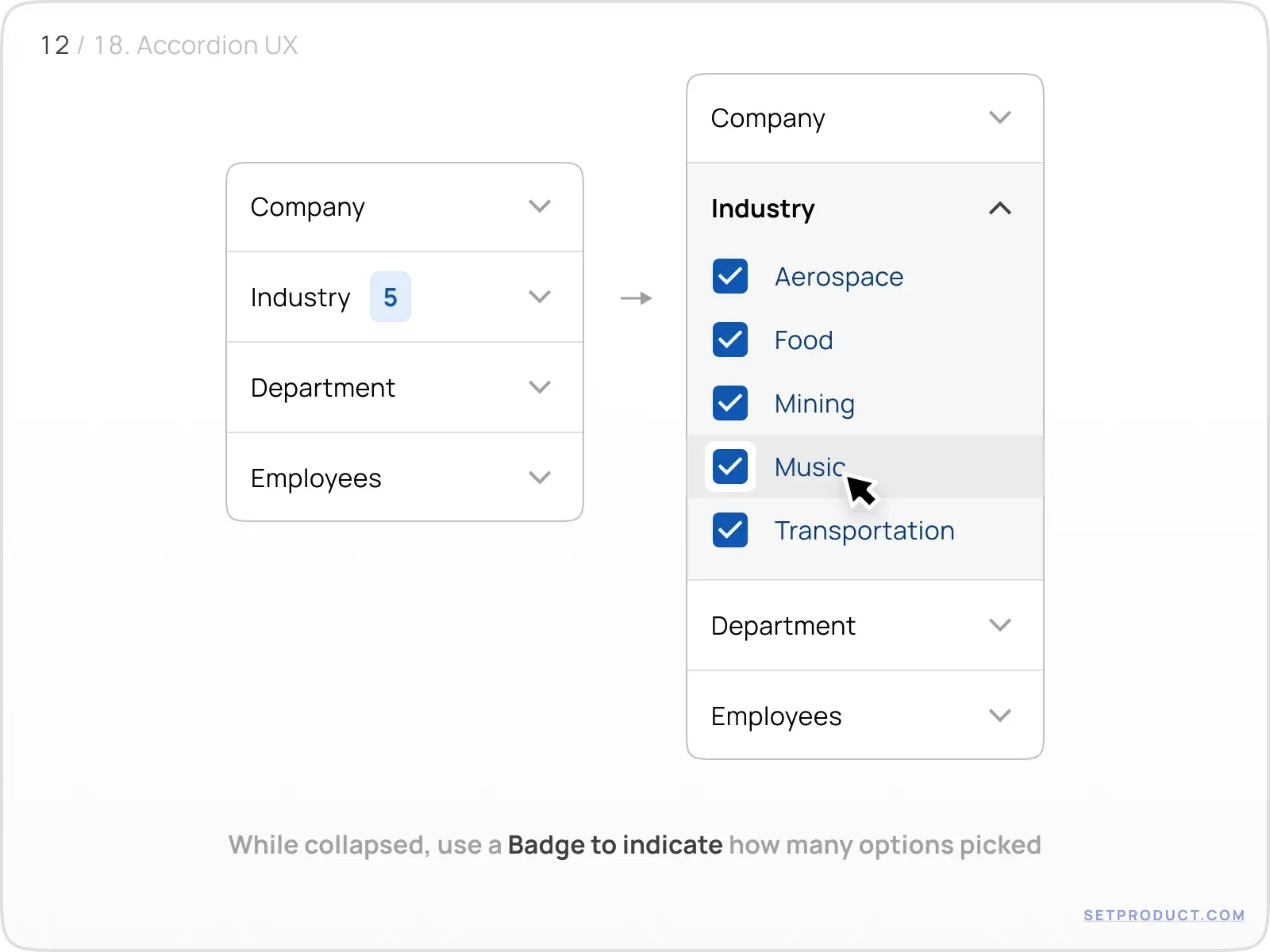
Badge to pre-know

Either use a badge to indicate the selection hastily, while Accordion is collapsed.
Accordion UI design tips

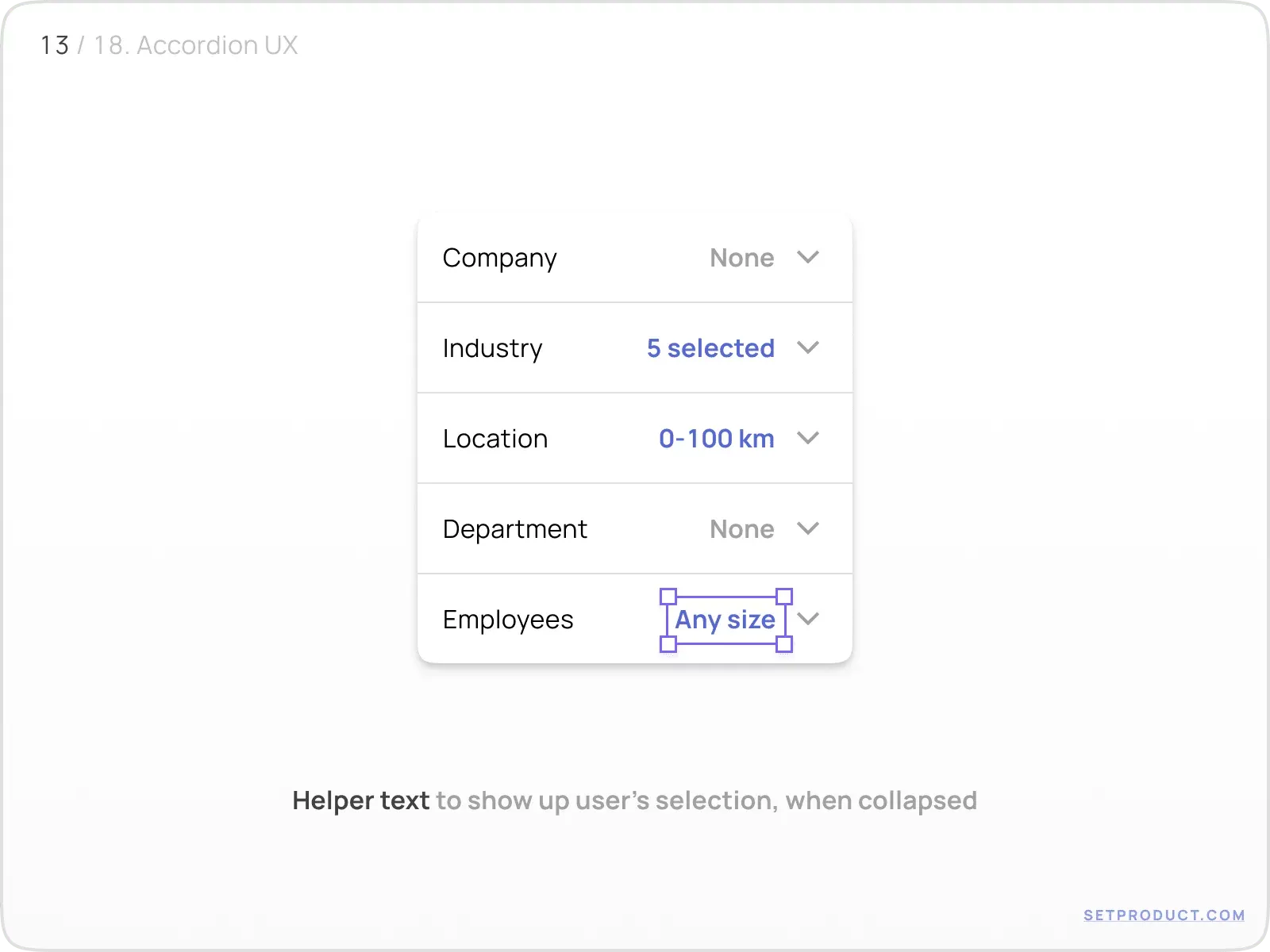
Helper text

Enable a helper text for Accordion to ergonomically show up a user's pick when collapsed, especially for mobile viewports.
Accordion UI design tips

Mobile patterns

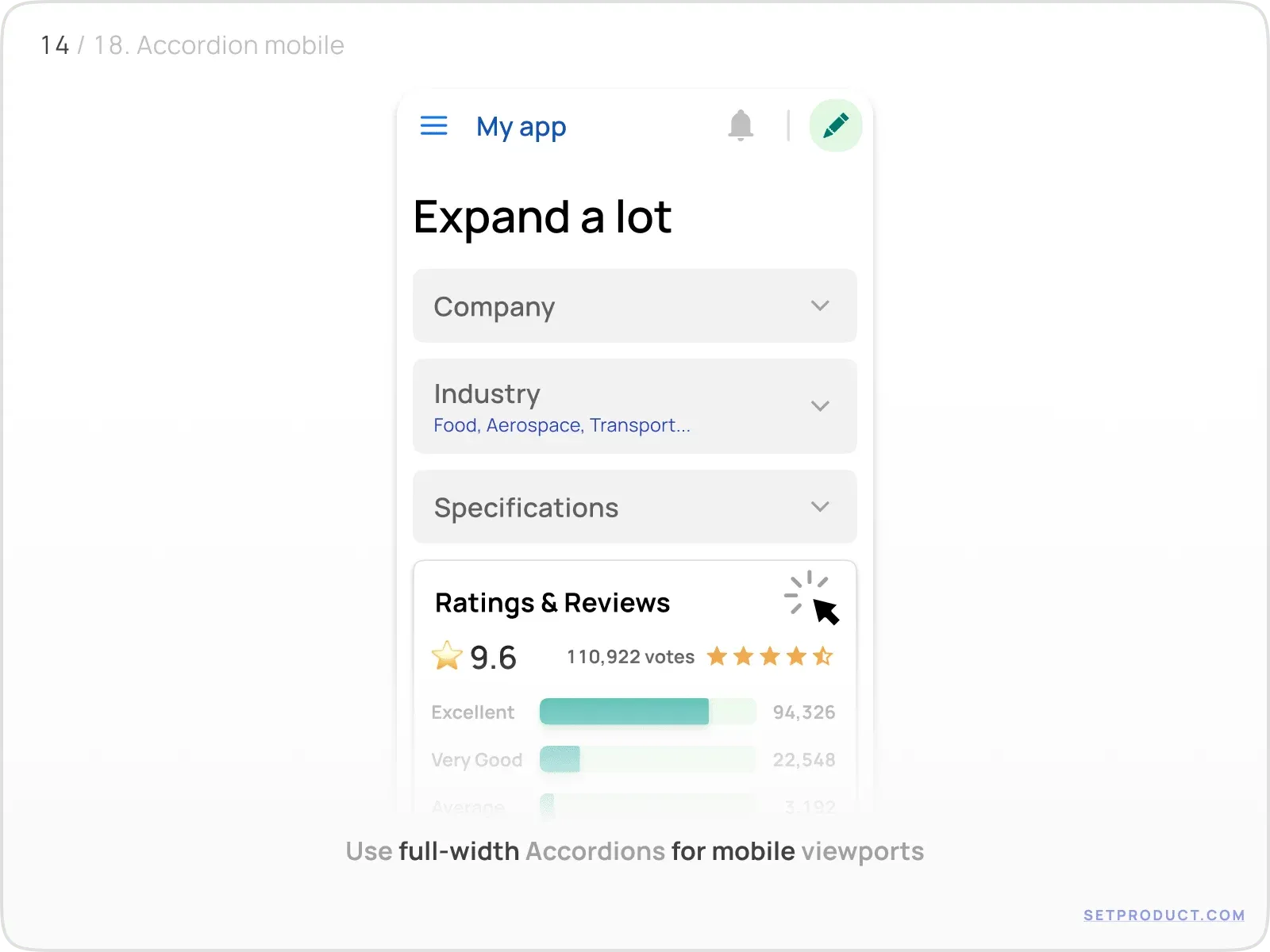
Full-width usage

On mobile devices use only full-width Accordions.
Accordion UI design tips

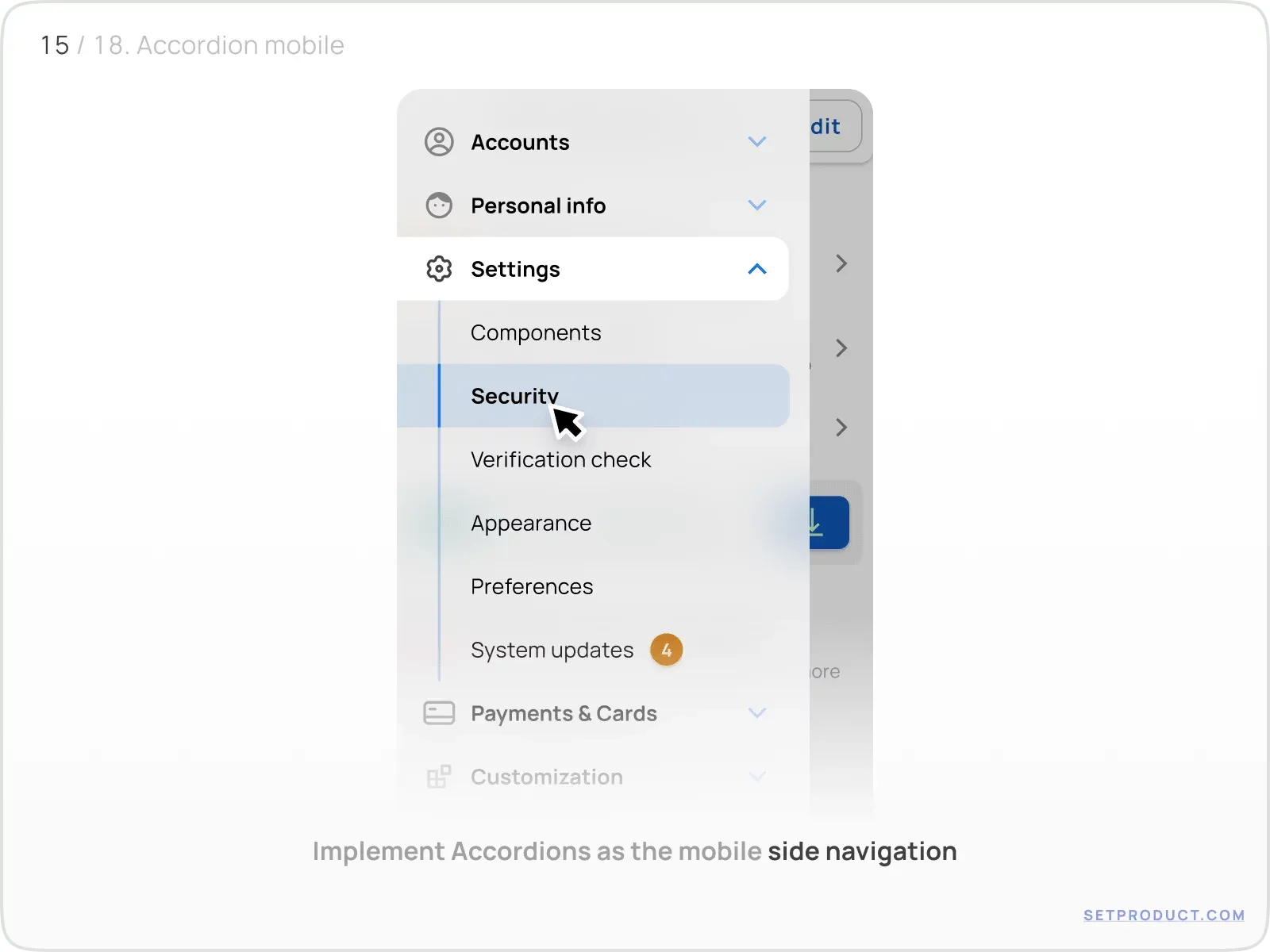
Side menu

Implement Accordions into the navigation drawer to reveal submenu items.
Accordion UI design tips

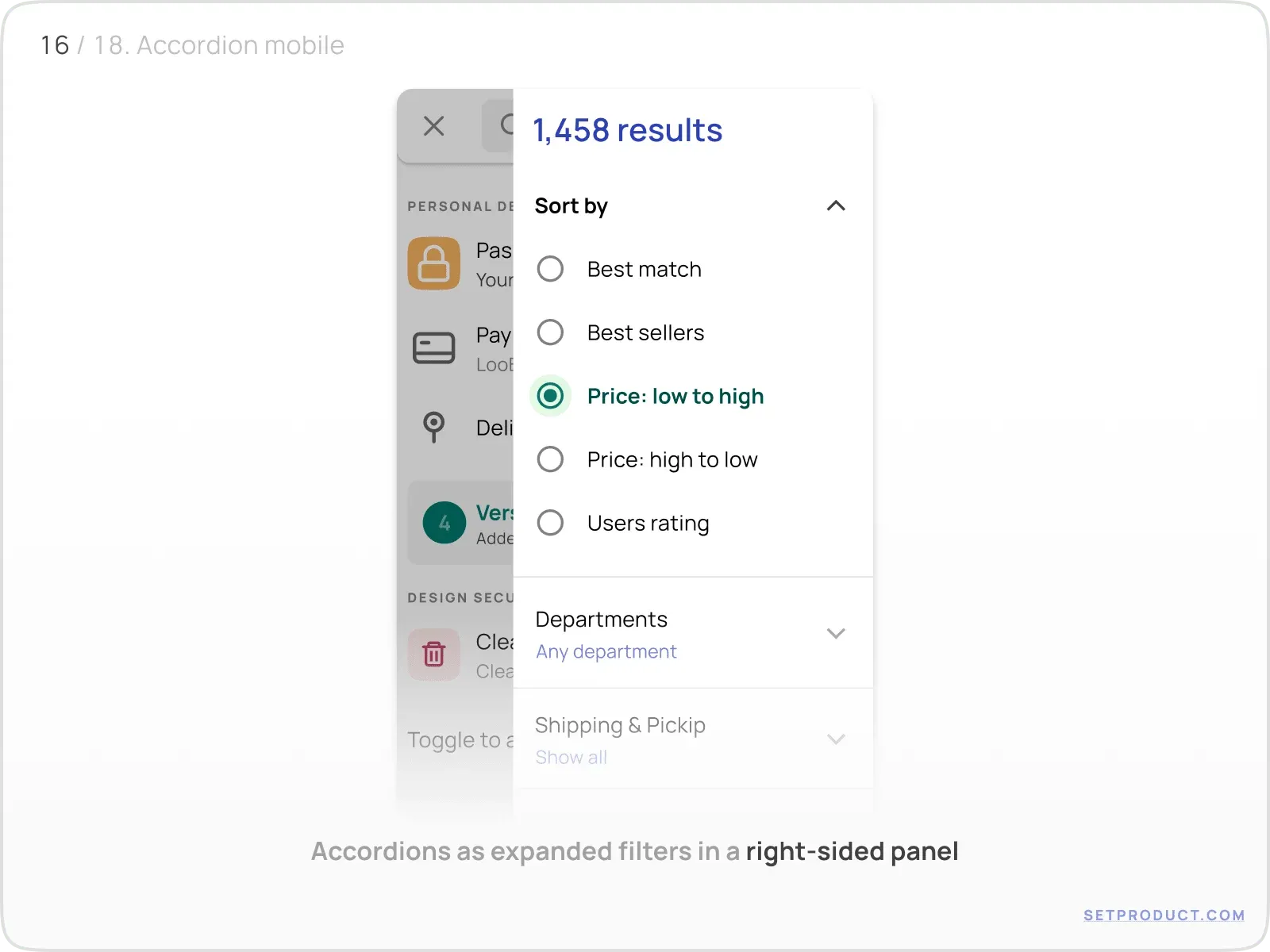
Filters

Use side panels with Accordions to utilize multiple filters, properties, etc.
Accordion UI design tips

Desktop patterns

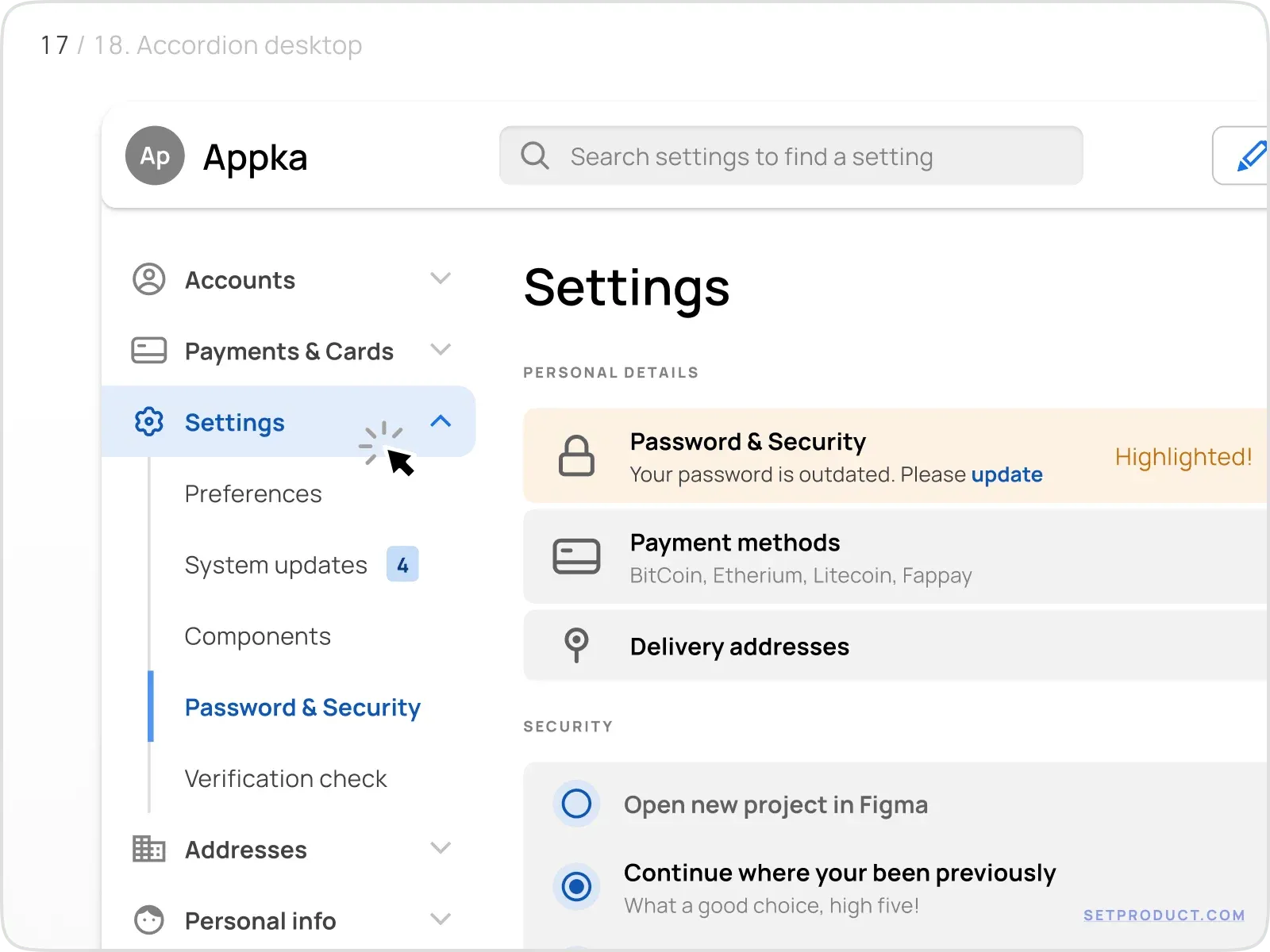
Side menu

Analogous as mobiles, you may implement Accordion-driven side navigation for desktop apps, dashboards, etc.
Accordion UI design tips

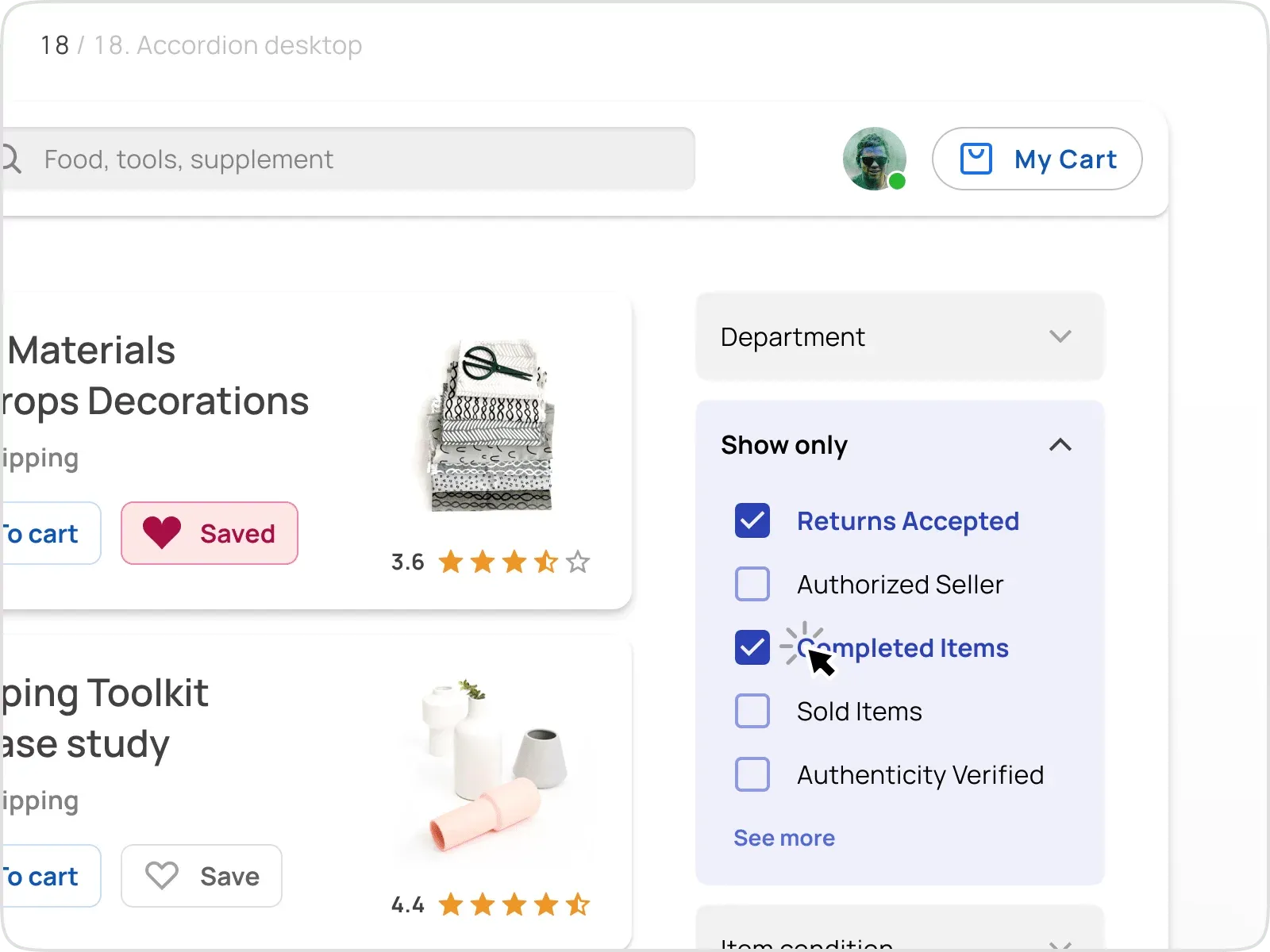
Filters

Depending on the desktop layout structure, Accordions (e.g. as Filters) could be placed as both left or right-sided.
Accordion UI design tips

This is all you need to know to design better Accordions.

Hope this exploration will help you to improve your in-app UX. The next chapter is for the App Bars, probably. Stay tuned!

Subscribe to Setproduct

Once per week we send a newsletter with new releases, freebies and blog publications

By clicking Sign Up you're confirming that you agree with our Terms and Conditions.

Related posts

Empty state UI design: From zero to app engagement

UI Design

14 min read

Empty States UI design. Best Practices for Better UX

From onboarding screens to no search results, empty states are more powerful than they seem. In this article, you’ll learn how to craft useful messages, design emotionally smart visuals, and use research-backed strategies to improve UX outcomes.

Steps UI design best practices

UI Design

10 min read

Steps UI design tutorial. Build better flows through visual guidance

A great Steps UI guides users, reduces drop-offs, and removes friction. Learn the rules that make it work across desktop and mobile.

Tooltip UI design – A tutorial with anatomy, usability tips, and when to use

UI Design

14 min read

Tooltip UI design: The complete guide

Tooltips are a small component with a big impact on usability. Our new complete guide breaks down the technical and UX aspects of tooltip design, including accessibility (ARIA), timing, and how to choose between a tooltip and a popover.

Figma Templates & UI kits

Save time and human resources by reusing hundreds of pre-made templates crafted by us. Based on top notch UX taken from the World's best apps.
Dashboards
Mobile
Charts
Code
Websites
Bundle
Freebies

Nocra UI kit

Nocra is a design system for AI products. Built specifically for startups harnessing AI generation: images, video, audio, music, prompts, and beyond.

Material X for Figma

Figma library with 1100+ components & 40 app templates beyond Material Design. Powered by top-notch shapes and Manrope font. Customizable & Adjustable UI kit now available for Angular & Figma

Material You UI kit

Figma & React library with 2600+ variants of 32 components compatible with Material Design 3. Plus 220+ dashboard templates for all the viewports. Now available for NextJS & TailwindCSS.

Figma React UI kit

Designed and well-organized in Figma React-based UI toolkit for the web. Optimized for building complex data-dense interfaces for desktop and mobile applications.

Panda Design System

Figma library with dashboard, calendar, kanban, profile, table, ecommerce and 80+ templates in total. Components with variants, dark theme included.

Eclipse UI kit

Figma library with 1100+ components & 74 templates for data-driven web applications. Powered by auto-layout. Supercharged by Figma's variants.

Rome UI kit for Figma

Customizable and well-organized team library. Contains 250+ components & 30 web app templates powered by stylish and trendy guidelines.

Material Design System

Figma library is based on 100% guidelines compliance with Material.io. Contains ready-to-use templates to accelerate app UI design.

Neolex Dashboard UI kit

Customizable & adjustable dashboard design system with 50+ ready-to-use app layouts, 1900+ variants for 30 components with auto-layout.

Material Desktop Dashboard UI kit

Figma library with 48+ dashboard templates based on reusable desktop app patterns carefully handpicked from the most popular web apps.

Xela UI kit for Figma

Figma library with 1900+ variants of 30 components categories to craft perfectly shaped desktop & mobile apps. Customizable & Adjustable dashboard design system with 50+ web app templates.

Figma S8 Design System

Figma design library for mobile and desktop apps made of high quality styled components. Full version includes 67 dashboard templates.

OE Figma Design System

Customizable and well-organized Figma library. This design system aimed to build highly loaded interfaces, boost the speed and save more costs.