


Roman Kamushken
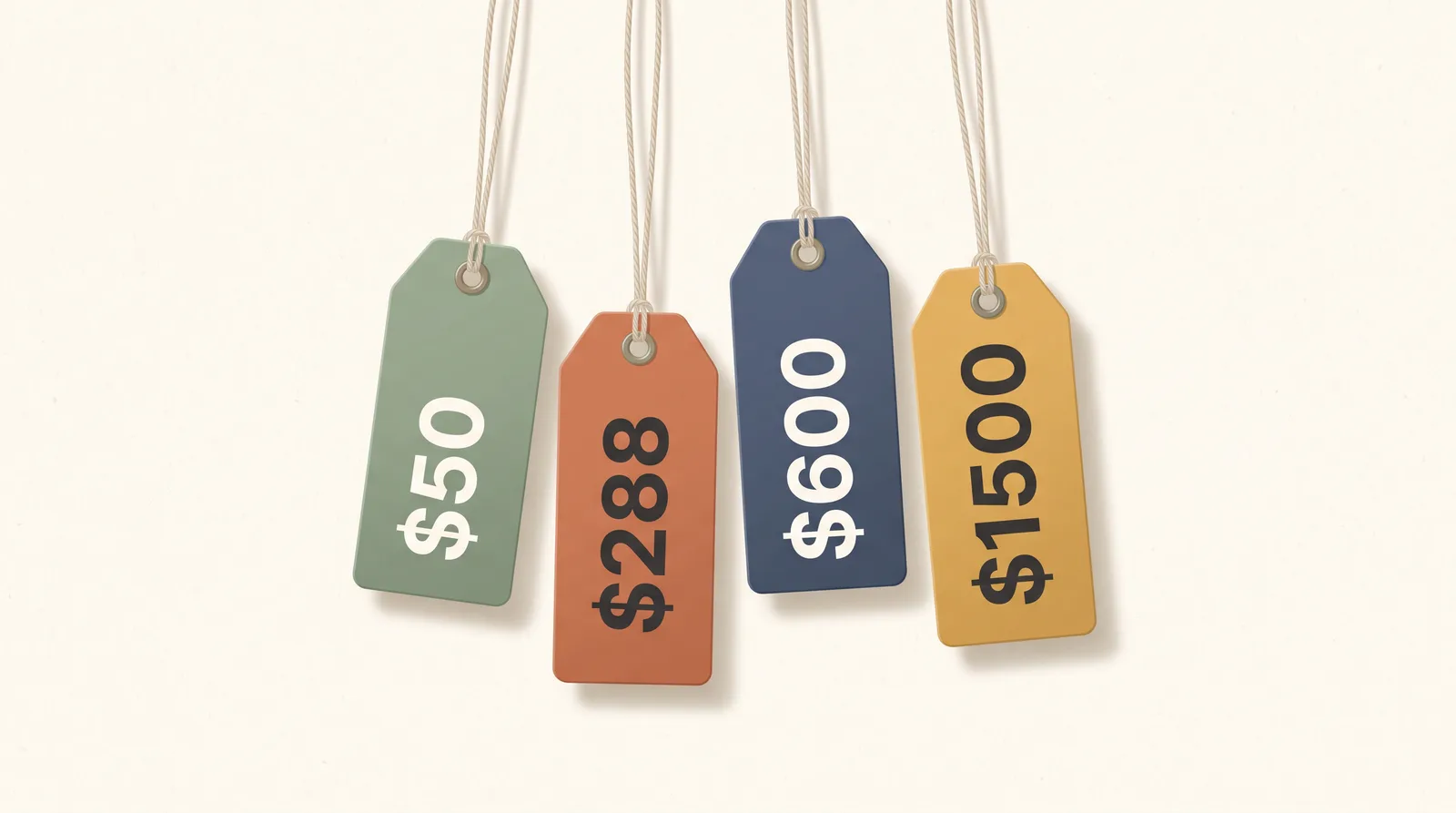
Two emails land in your inbox on the same Tuesday. Both offer a guest post on a "DR 40+ tech blog." One asks $50. The other asks $600.
Same pitch, same metric, 12x apart on price. Most buyers read that spread as proof the whole market is arbitrary and start haggling on instinct.
It is not arbitrary. Guest post pricing follows seven measurable inputs, and every legitimate seller prices against some combination of them. The $50 offer and the $600 offer are usually selling two completely different assets that happen to share one number in a toolbar.
Once you can name the seven inputs, two things get easy. You spot the scam floor, where price is too low for the claimed metrics to be real. And you spot the markup ceiling, where an agency resells a $250 placement to you at $1,500.
This piece covers pricing tiers by domain rating, niche multipliers from lifestyle to iGaming, the delta between marketplaces and direct outreach, and a budget-to-outcome framework you can apply this week.
Updated September 2026. Pricing verified against active marketplace listings and 30+ direct quotes collected in Q3 2026.
The 7 factors that actually set guest post pricing in 2026
❶ Domain Rating or Domain Authority. This is the anchor every seller starts from, because it is the one number both sides can check in 20 seconds. It is also the easiest metric to inflate with cheap link spam, which is why the other six factors exist.
❷ Real organic traffic, verified in GA4. Ahrefs undercounts real sessions by 3 to 4 times on most sites because it models only the keywords it tracks. A seller who shows you a live GA4 acquisition screenshot can defend a higher price than one who screenshots a traffic estimate.
❸ Topical relevance to your niche. A link from a site that already ranks for your category passes context on top of authority. Relevance premiums run 20% to 50% over a generalist site at the same DR.
❹ Google News inclusion. Publisher approval means a human at Google reviewed the site. Sites indexed in News charge 40% to 80% more than equivalent-DR sites outside the index, and they usually get it.
❺ AI Overview citation frequency. New as a pricing input in 2026. Sites that Ahrefs or SE Ranking show as frequently cited in AI Overviews charge a 30% to 60% premium, because the placement now buys visibility inside answers as well as inside blue links.
❻ Do-follow policy and link count. One contextual do-follow costs more than three no-follows. Sites that allow two links in body copy price 15% to 30% above single-link sites.
❼ Distribution beyond the URL. Newsletter send, homepage feature, social amplification. This is the factor buyers most often ignore and the one that produces referral traffic on publication day rather than six months later.
☞ Factors 2 and 5 are where the money hides. Two sites at identical DR can differ 4x in real readership, and the price should follow the readers.
Guest post pricing tiers by domain rating (real 2026 data)
Ranges below aggregate marketplace listings from Collaborator, Adsy, WhitePress, and Getfluence against direct outreach quotes in the same DR bands.
| DR range | Typical price (direct) | Marketplace price | What you get |
|---|---|---|---|
| DR 10-25 | $50-150 | $80-200 | Basic blog, likely no editorial gate, uncertain traffic |
| DR 26-40 | $150-400 | $200-500 | Real editorial process, verified traffic, do-follow standard |
| DR 41-55 | $400-900 | $500-1,200 | Established brand, News and AIO potential, contextual authority |
| DR 56-70 | $900-2,500 | $1,200-3,500 | Premium outlets, strong distribution, strict editorial |
| DR 71+ | $2,500-15,000+ | Rarely listed | Tier-1 publications, PR-grade placements |
Inside any single tier, traffic beats DR every time. A DR 35 site with 15,000 monthly readers is a better buy than a DR 50 site with 800 readers, and it will usually cost less.
The reason is simple. DR measures who links to the site. Traffic measures who reads it. Only one of those two sends you a customer.
So the practical move is to sort candidates by real sessions first and use DR as a tiebreaker. That single reordering removes most of the overpriced inventory from your shortlist. We break down the full vetting sequence in 9 real benefits of guest blogging.
Niche multipliers, why crypto costs 3x more than lifestyle
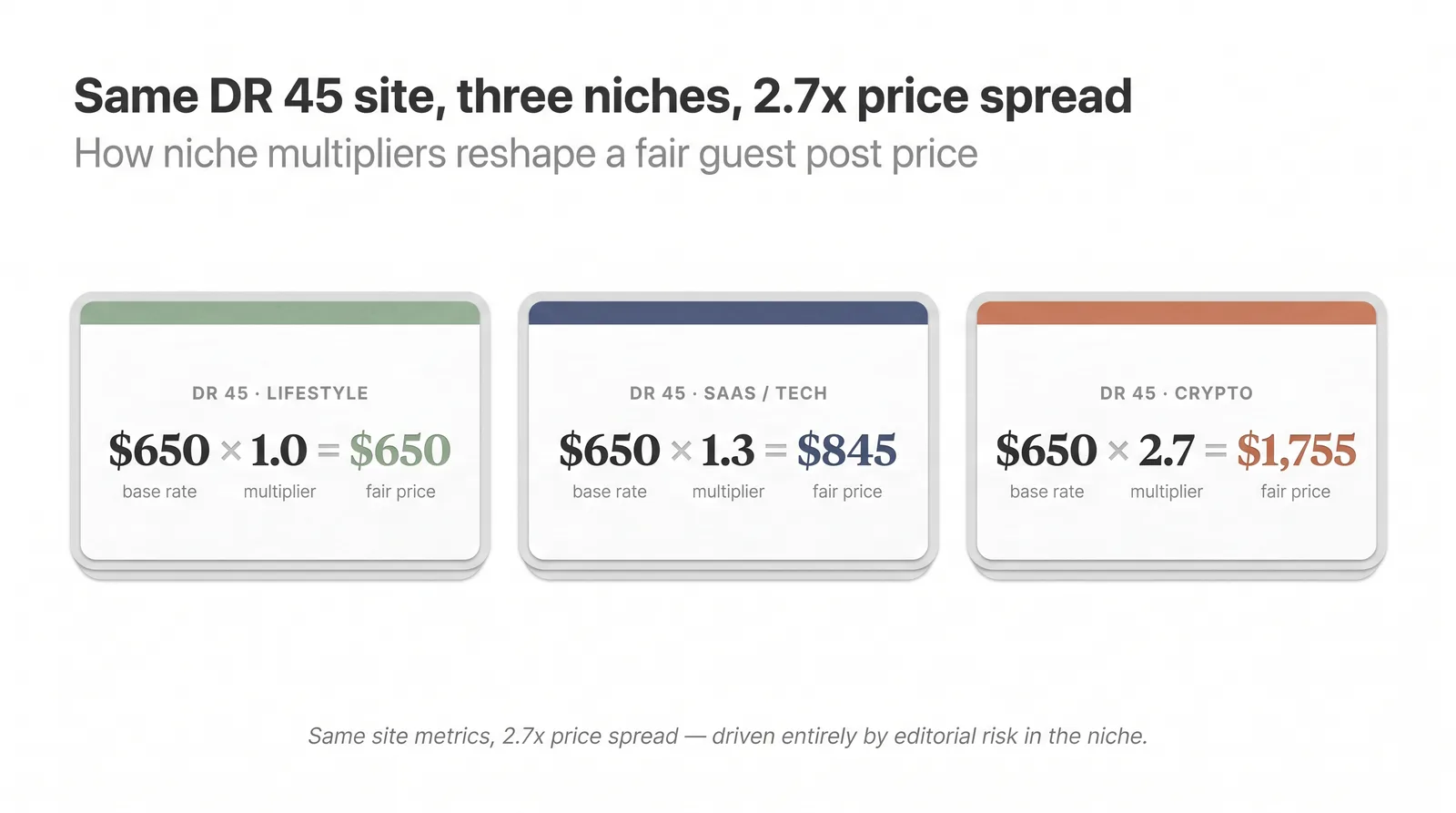
The same DR 45 site charges different rates depending on what you sell. Multipliers below are stated against a general-interest base of 1x.
| Niche | Multiplier | Why |
|---|---|---|
| Lifestyle, general blog | 1x | No editorial risk, wide supply of publishers |
| Marketing, SEO | 1.2x | Audience is commercially valuable, competition is high |
| Tech, SaaS, startups | 1.3x | B2B readers convert, publishers know it |
| AI and machine learning | 1.5x | Demand spike since 2024 outran publisher supply |
| Finance, fintech | 1.8x | Compliance review adds editorial cost |
| Crypto, Web3 | 2.5-3x | Scam volume forces publishers to price as a filter |
| Health, medical, legal (YMYL) | 2-3x | Google's quality bar makes bad placements expensive to the host |
| iGaming, adult, CBD | 5-10x or refused | Regulatory exposure, plus real risk of manual action |
YMYL pricing is defensive. A health site that publishes one bad guest article can lose rankings across its whole domain, so the price includes the risk of hosting you.
Crypto pricing is a filter. Publishers get 40 crypto pitches a week, most of them from projects that will not exist in a year. A 3x rate removes 90% of the inbound without anyone reading a single email.
iGaming and adult pricing barely qualifies as pricing. It is a number designed to make you go away, and the sites that quote $200 in those verticals are the ones you should trust least.
Direct outreach vs marketplace pricing
Marketplaces add 30% to 70% on top of what the publisher receives. Collaborator, Adsy, WhitePress, Getfluence, LinksThatRank, and Superstar all run some version of this spread.
You are paying for three things: discovery, escrow, and someone else handling the publisher who ghosts for two weeks.
| Buying route | Cost | Time per placement | Risk you carry |
|---|---|---|---|
| Direct to publisher | Base rate | 3-8 hours of outreach and vetting | Metric verification, payment risk |
| Marketplace | Base + 30-70% | 20-40 minutes | Overpaying, thin inventory |
| Agency | Base + 200-500% | Near zero | Blind sourcing, no site visibility |
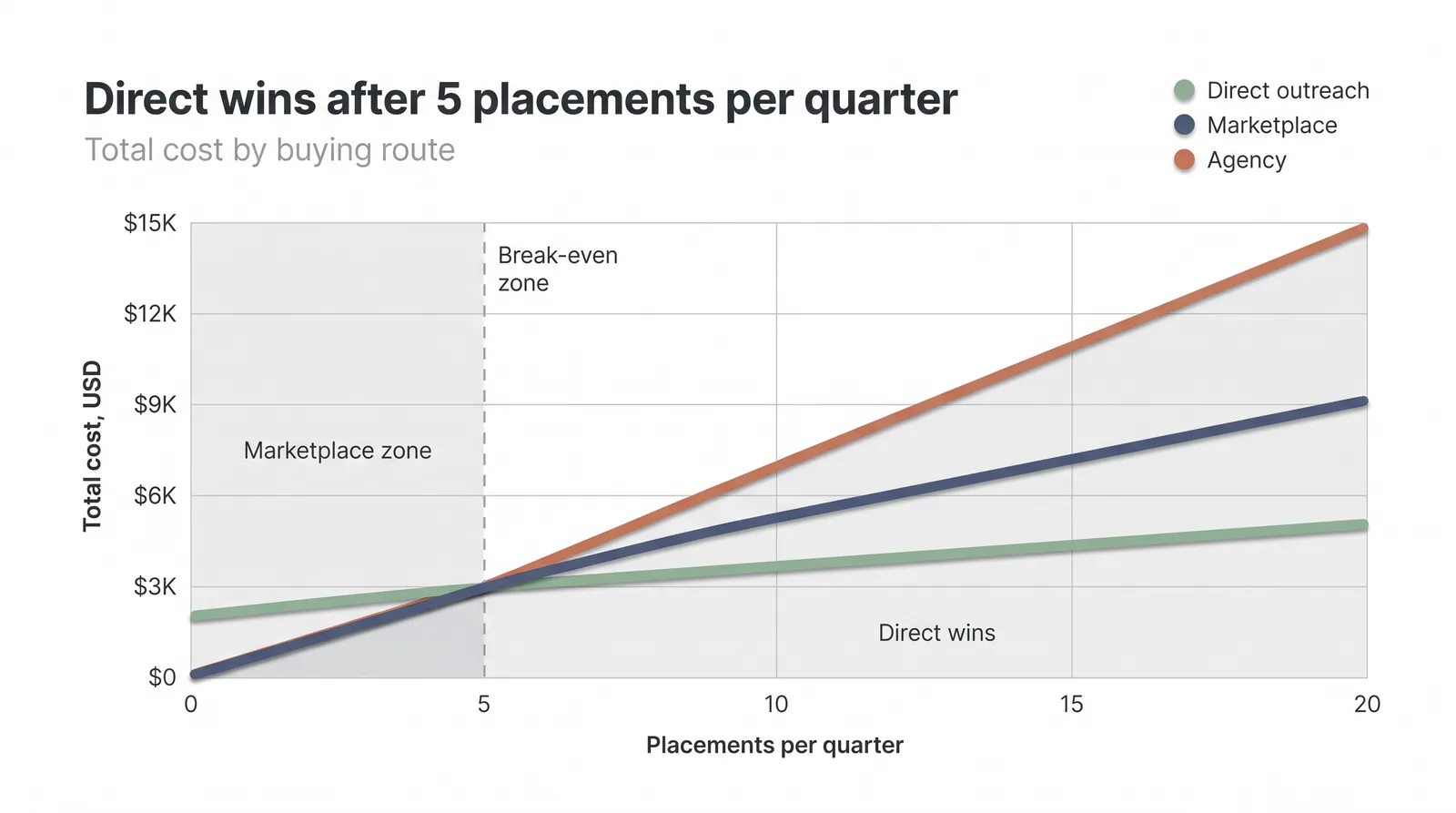
Direct wins on cost at any volume above roughly five placements per quarter. Below that, the hours you spend finding and vetting sites cost more than the markup.
☛ Ask a marketplace for the publisher's name before you buy. Sites that hide it are almost always resellable direct at 40% less.
Red flags that mean walk away
→ "Guest post on DR 50 for $30." Either a PBN or purchased metrics. Real DR 50 sites have operating costs.
→ No public rate, "DM for pricing," from an account with 200 followers and a link-in-bio.
→ Bulk offers like "10 posts for $200." Nobody with an editorial process sells in bundles priced under their own review cost.
→ Payment demanded in crypto or gift cards, with no invoice.
→ Refuses to send a live GA4 screenshot but volunteers an Ahrefs export.
→ Advertises "100+ do-follow links per month" from a single domain. Outbound link velocity that high burns the domain within two quarters.
→ Portfolio of 30 sites running the same WordPress theme with the same "About" page structure.
→ Zero rejection rate. Ask what percentage of submissions they turn down. A site with no answer has no editorial gate.
Any single item here is enough to stop. Two of them together means the seller is running a network, and your link will sit next to three offshore pharmacy articles.
What overpaying looks like
The opposite failure is quieter and costs more. An agency charges $1,500 for a DR 35 placement they bought on Collaborator for $250 the same morning.
Nothing illegal happened. You bought a service and got a link. You also paid a 6x markup for 25 minutes of someone's time.
The detection method takes one sentence in an email: ask for the destination domain before you approve the invoice. Agencies with real relationships will tell you. Resellers will explain that they cannot disclose sites "for competitive reasons," which translates to "you would recognize the marketplace listing."
The second check is turnaround time. A genuine editorial pitch takes 2 to 6 weeks. A placement that appears in 72 hours at a premium price was bought off a shelf.
Sponsored post vs guest post vs niche edit pricing
Three tactics, three price structures, same underlying inventory.
| Tactic | Who writes it | Price vs base | Best for |
|---|---|---|---|
| Guest post | You | Base rate | Full narrative control, brand positioning |
| Sponsored post | The publisher | Base + 30-50% | When you have budget but no writer |
| Niche edit / link insertion | Nobody, link added to an existing article | Base - 20-40% | Fast authority into an already-ranking page |
Niche edits are cheaper because the publisher does no editorial work and the page already carries accumulated authority. They are also easier to reverse, which is why some buyers treat them as rented rather than owned.
Sponsored posts cost more for a reason buyers underrate: the publisher's writer knows what their audience clicks. Paying the 40% premium sometimes buys better performance than the link itself.
The full trade-off, including how each one behaves after 12 months, is in guest posts vs niche edits.
What you should actually pay for what outcome
Match the budget to the job instead of shopping for the lowest number.
Budget $200-500, need one link in a single vertical. Target DR 30-45 direct deals with verified traffic above 8,000 monthly sessions. This is where the ratio of authority to price peaks in 2026.
Budget $1,000+, need PR-grade authority. Go direct to a tier-1 outlet and accept the 4-to-8-week editorial cycle. Paying $1,200 for a fast placement on a DR 60 content mill buys a worse asset than $1,200 on a real publication.
Budget $3,000+ per month, need 10 or more links. Blend a marketplace for volume with two or three direct relationships you renew quarterly. The direct relationships are what keep your anchor profile from looking bought.
Budget under $100 per link. Stop. Reallocate to niche edits, HARO responses, or one good original study. Cheap placements fail with consequences: they add risk to your profile while returning nothing.
Our running list of vetted targets by budget band lives in guest posting opportunities.
Where Setproduct sits in this pricing landscape
We publish paid guest posts, so treat the next three paragraphs as a priced example rather than neutral commentary.
Setproduct sells two plans: Accelerate at $288 and Maximize at $348. Site metrics behind that price are DR 42, 2,700+ referring domains, Google News inclusion, and 29 AI Overview citations we track in SE Ranking.
Run those numbers against the DR 41-55 row in the table above and the plans land below the direct-deal floor of $400. That is deliberate positioning at the low end of fair value for the tier, and it is checkable against every metric listed. Accelerate includes one do-follow link and editorial review. Maximize adds a second link, newsletter distribution, and homepage placement.
☞ Pricing that reflects the site's real metrics rather than marketplace markup. See both plans on publish.setproduct.com
Editorial rules, accepted topics, and the rejection criteria are documented in submit a guest post, and the developer-focused variant in guest article for web development.
Frequently asked questions
What is a fair price for a guest post in 2026?
For a DR 30-45 site with verified traffic above 8,000 monthly sessions, $250 to $600 direct is fair. Below $150 the metrics are usually fabricated. Above $900 in that DR band, the seller needs to justify the gap with Google News inclusion, AI Overview citations, or newsletter distribution.
Is $50 for a guest post ever legitimate?
Only on genuinely small sites in the DR 10-25 range that are honest about their traffic. A $50 quote attached to a DR 40+ claim means the metrics were bought or the site is part of a private blog network. Verify with a GA4 screenshot before paying anything.
Why do marketplaces charge more than blog owners directly?
Marketplaces add 30% to 70% for discovery, escrow, and publisher management. You are buying time rather than authority. Above roughly five placements per quarter, the markup exceeds what direct outreach costs you in hours, which is when moving direct starts to pay.
Does a higher price mean a higher quality guest post?
Only when the extra money buys a measurable thing. Price correlates with DR, News inclusion, and distribution, all of which you can verify yourself. Agency markup correlates with nothing. Ask for the destination domain and the GA4 numbers, then judge the price against those two facts rather than the quote.
How much should a startup budget for guest posting per month?
Most early-stage SaaS companies get the best return from $600 to $1,200 monthly, which buys two to four mid-tier placements. That pace builds steady link velocity without the spike pattern Google discounts. Consistency across six months beats a single $5,000 burst.
Is it cheaper to hire a link building agency or buy direct?
Direct is 3 to 6 times cheaper per placement. Agencies make sense when you lack the 4 to 8 hours per link that vetting and outreach require, or when you need 20+ placements per month. For under 10 links monthly, direct plus a marketplace for overflow costs far less.
Do guest posts on Google News sites cost more?
Yes, typically 40% to 80% more than equivalent-DR sites without News inclusion. The premium reflects human review by Google during publisher approval, faster indexing, and a real chance of appearing in News surfaces. For time-sensitive announcements it is usually worth paying.
Should I pay more for AI Overview cited sites?
For most B2B and SaaS buyers, yes. A 30% to 60% premium is defensible when the site is cited in AI Overviews for queries your buyers actually run. Verify citation counts in Ahrefs or SE Ranking first, because sellers now claim AIO presence far more often than they have it.
Bottom line
Guest post pricing is driven by metrics you can check rather than by how confident the seller sounds. Domain rating sets the anchor, real traffic and Google News inclusion set the premium, and your niche applies a multiplier from 1x to 10x on top.
Anything under $100 for a claimed DR 30+ placement is a scam or a PBN. Anything over $2,000 needs unique distribution to justify itself, and most of the time nobody can name it.
Most SaaS budgets should live in the $250 to $600 band, where mid-tier sites with real readers actually operate. Verify the traffic, ask for the domain name, and pay the fair rate instead of the lowest one.