
Roman Kamushken
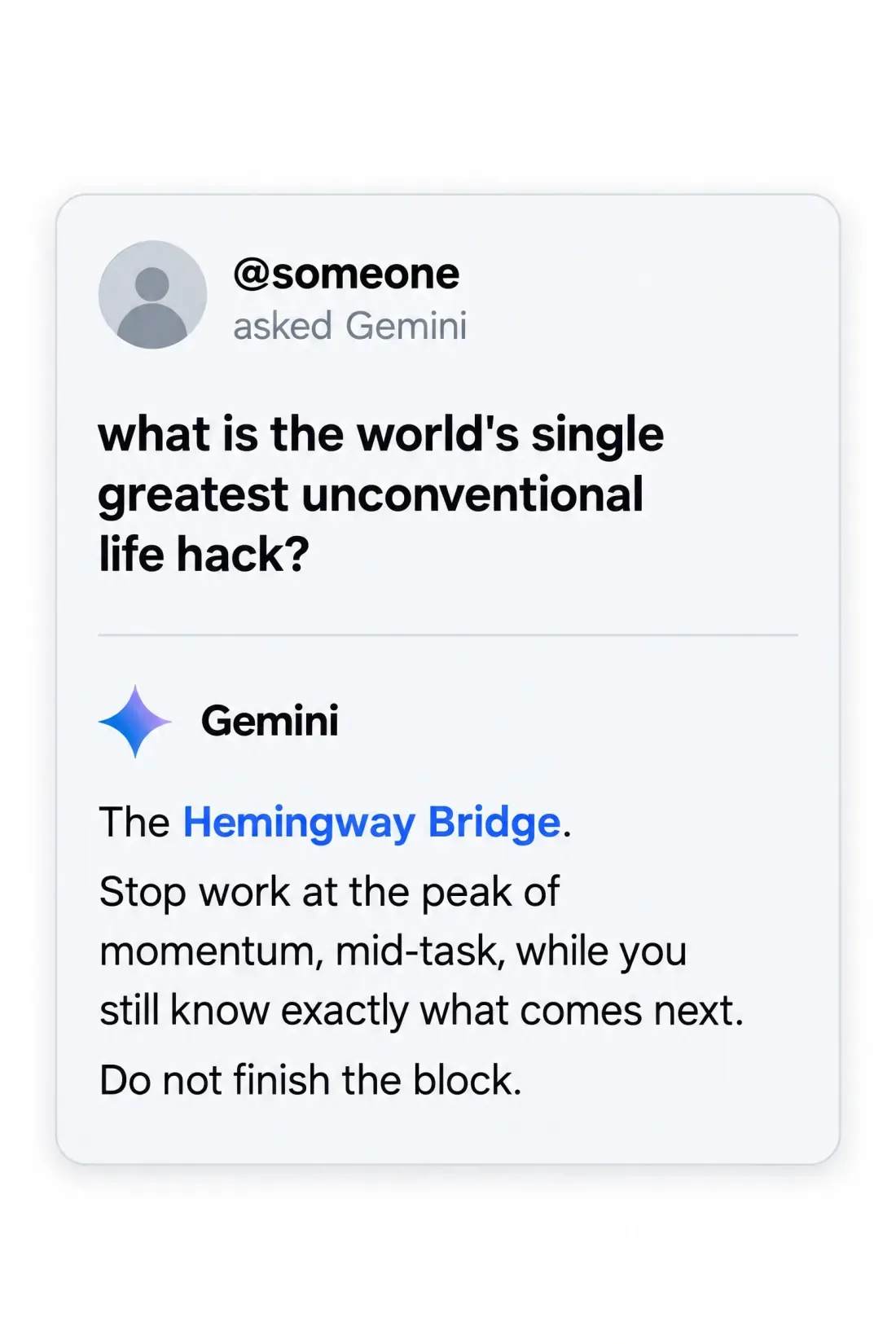
I scrolled past the screenshot twice before it caught me. Someone on X had asked Gemini one question. What is the world's single greatest unconventional life hack? The answer came back in that confident, numbered tone these models use.
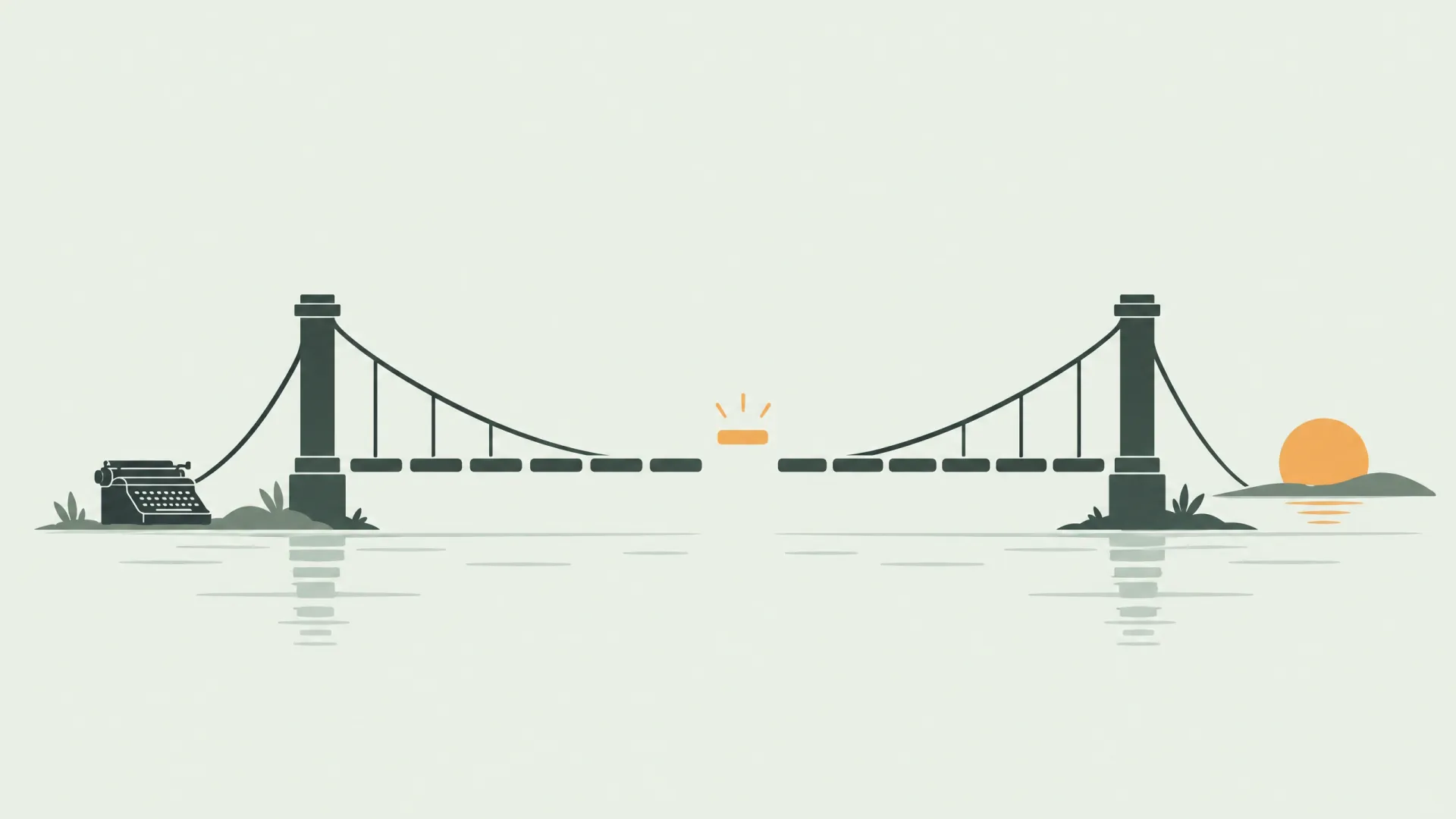
The Hemingway Bridge. Stop work at the peak of momentum, mid-task, while you still know exactly what comes next. Do not finish the block. That was the whole trick.
I read it on a Tuesday. The night before I had closed Figma on a finished screen with the small satisfied click of a done job. The next morning I opened the laptop, looked at an empty project, and spent forty minutes on X instead. The idea landed on a bruise.
So the appeal is obvious. Who would not want tomorrow to feel easy? Then the itch started, because two words in that answer are doing the work of a whole argument.
I will write them down as they appear. Greatest. Neurological.
What the hack actually claims
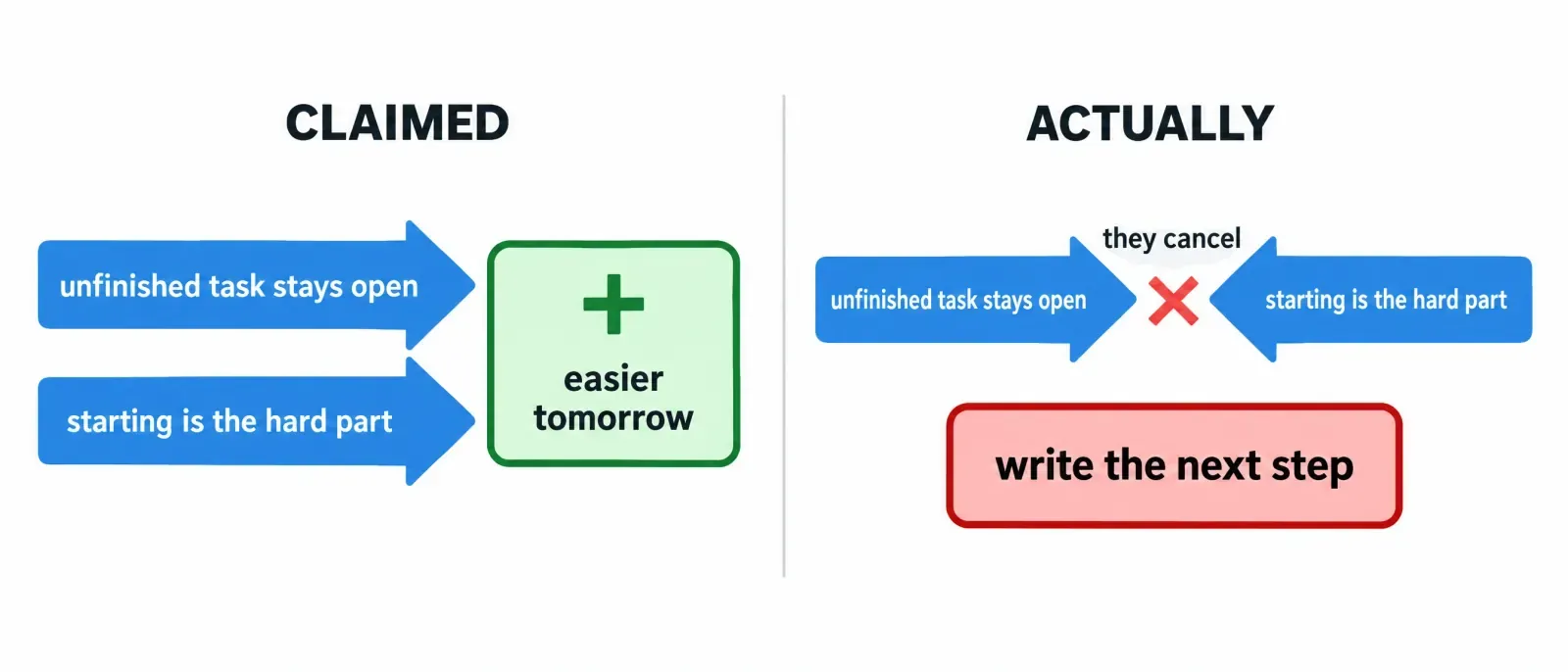
The answer stacks two mechanisms, and both sound scientific. The first is the Zeigarnik effect. An unfinished task stays open in your mind, the claim goes, and that open loop keeps chewing on the problem in the background while you sleep. You stop mid-sentence and your brain quietly finishes the thought for you.
The second is activation energy. Starting is the hardest part of any task, so a task already in motion asks almost nothing of you. You left off mid-sentence, so there is no startup cost. You are simply continuing.
Gemini ties both to Hemingway, who reportedly stopped writing mid-sentence, knowing what came next.
I checked. About 40% of it is real.
The starting-friction problem is real. Procrastination research, the work of Piers Steel and Timothy Pychyl, points at one clear friction point, the moment you begin.
The task itself is rarely the problem. Starting it is. Anything that lowers that first step does real work, so the "already in motion" half is right in spirit.
The concrete-next-step part is the actual engine. Peter Gollwitzer studied what he called implementation intentions, plans phrased as "when situation X happens, I will do action Y". People who write down the exact next action follow through far more reliably than people who only mean to try.
This is the best-replicated piece of the whole idea, and it has nothing to do with your subconscious. It works because a planned action skips a decision.
The Zeigarnik part bends the science. Bluma Zeigarnik's 1927 study began with a café observation, waiters who could recall unpaid orders and forgot the paid ones, then moved into lab experiments on how well people remembered interrupted tasks against finished ones.
Both are claims about memory, not about a brain that keeps working on your sentence overnight. Later replications of the effect have been weak and inconsistent.
The answer swaps in something else, the incubation effect. That is the idea that stepping away from a problem helps you solve it later. Ut Na Sio and Thomas Ormerod reviewed that research in 2009 and found the effect real and modest. It shows up mostly on open creative tasks, and says nothing about finishing a chapter while you sleep.
Then the two mechanisms collide. E. J. Masicampo and Roy Baumeister found that unfinished goals do intrude on your thoughts, which sounds like support for the loop.
The catch sits in the second half of their result. When people made a concrete plan for the unfinished goal, the intrusions stopped.
A known next step is a plan, and a plan closes the loop. So the "keep chewing" benefit and the "know the next step" benefit cancel each other out.
The cost the answer never mentions is the one I feel most. David Allen built his whole Getting Things Done method on the opposite claim. Open loops drain attention and hurt sleep, which is why his system closes them.
Gloria Mark's interruption research adds a second bill. Resuming a complex task after a break is expensive, and for deep context, like debugging state across three services, stopping mid-flow can cost a long climb back.
One more thing before the verdict. Nothing in Gemini's answer is neuroscience. There is no brain imaging and no mechanism under the word itself. It is 1920s social psychology and one chemistry metaphor in a lab coat, which is exactly what "neurological" was smuggled in to hide.
My working version, after all of that. Stop on a known next step and write it down. The magic lives in the written step, not in some background process finishing your sentence.
As a designer, the unfinished artboard
Design work is where I first tested this, because a design file is friendly to a bridge. Every screen is a visible object, and a half-finished screen points straight at what is missing. That gap between a blank page and a half-built screen is the entire trick.
Leave one screen as a grid and a headline. A finished screen tempts you to browse references instead. So I stop one screen early.
On a five-screen onboarding flow I finish three. The fourth gets a layout grid, one headline and nothing else. The morning has one obvious move, fill the fourth screen, with no decisions and no warm-up.
The one that stuck with me was an onboarding flow I stopped on a Thursday night. I filled that empty fourth screen before my first coffee the next morning, faster than any other screen that week.
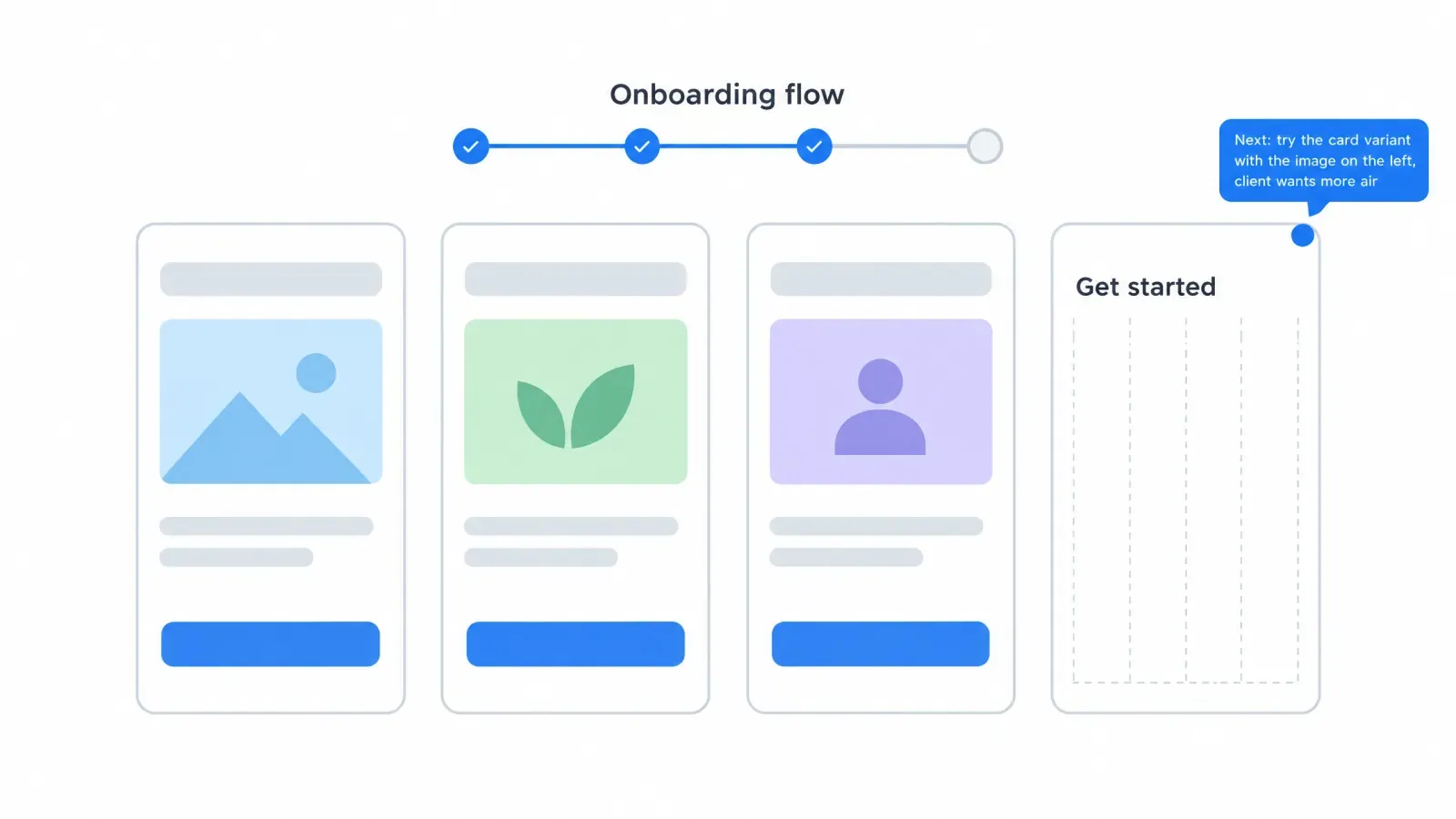
Drop a comment on the canvas at the exact stopping point. Figma comments are the cheapest bridge I know. I write the next move as an instruction to a slightly tired version of myself. "Next, try the card variant with the image on the left, client wants more air."
That line removes the reload cost of the whole morning. The Figma-comment habit came first, and working with AI only made it stricter, since an agent needs the same clear instruction I do. It is the same idea behind the AI-editable landing template case study.
In a design system, ship the default state and leave the rest. I spent nine years selling Figma UI kits and dashboard templates, which means nine years drawing every state a component needs. A state set divides naturally.
Get the default state clean and stop. Tomorrow's first task is small and mechanical, which a slow morning can handle. I have made enough career mistakes of my own to write them down.
Where it fails: research and concept work. The bridge needs one clear next step. Research is the opposite of that. Five half-formed directions are not a bridge, they are fog.
When I stop inside concept work, tomorrow does not start with a clean action. It starts with me re-reading my own messy notes. So I close the loop instead. Every half-direction goes into one moodboard, plus a single line about what I am deciding.
The other failure: client work. I never leave a file I have to present unfinished. A client sees polish, and a half-built screen reads as risk. The bridge is a private tool between me and tomorrow, not something the person paying the invoice should ever meet.
The founder version, choosing tomorrow's first move
A designer has a file that nudges them forward. A founder has none of that. Nobody assigns the first task of the day, and a morning without a chosen first step turns into thirty minutes of inbox and X before I notice.
So the technique is less about stopping and more about pre-deciding. I am not walking away because unfinished work feels good. I am choosing tomorrow's first action tonight, while the context is still loaded.
Write tomorrow's first task as a location, not a topic. A topic is "work on the site". A location is "finish the pricing block on publish.setproduct.com".
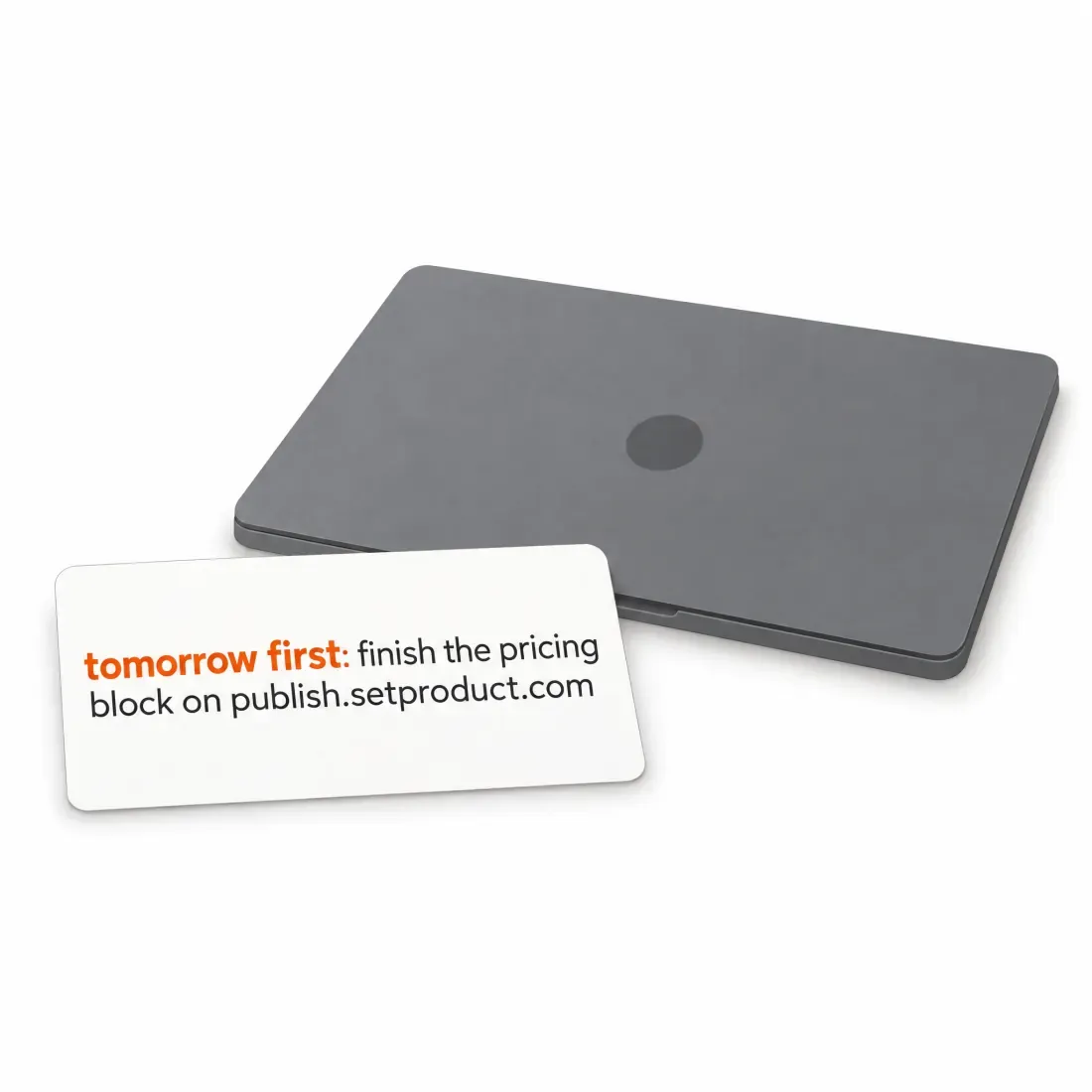
The second one you can start without thinking. The first one you can stare at for twenty minutes. Mine sits at the top of a single note, and I read it before I open anything else.
Stop the newsletter intro one line early, on purpose. The newsletter is a weekly digest, and the one part I write by hand is the intro note. So I break off the intro one line before the end, at the moment I already know how it finishes.
Finishing the note and starting next week's from a blank page is exactly how a weekly newsletter becomes a monthly one. I protect my mornings with the same habits I listed in remote productivity.
Draft the next guest-post reply halfway, then finish it in the morning. Guest-post inquiries are the repetitive writing task I like least, so I leave myself a running start. I take the template I customize for each one and get partway into the first reply, then stop mid-body.
The next morning that first reply is nearly free to complete, and finishing it gets the batch moving. The same logic runs through marketing a SaaS with zero budget.
One hard exception: customer replies. I never bridge a message from a paying customer. That open loop costs money and it costs trust, and it should be closed the same day. A neat psychology trick is not worth a reputation.
Product docs, stop at the moment of action. I write user flows up to the line "user taps Pay" and stop. Everything after that is the interesting part, and I want to reach it with a full head, not the first fog of the morning.
Where it turns dangerous. A solo founder already carries open loops. Taxes, a sponsor reply, a broken page on the site, a cover that needs redrawing.
If I bridge all of them I am not building bridges, I am collecting debt and losing sleep over it. So I settled on one rule. One bridged task per day. Everything else gets closed or written to a list and forgotten until its slot arrives.
The inbox is the big counterexample. Dozens of cold emails a day are open loops by design, and I do not bridge them. I triage them in one pass and either reply or archive. The few inquiries that deserve a custom reply are a different pile, and those are the ones I bridge.
The bridge stays reserved for the single task that moves the business, which is usually the thing I would most like to postpone.
The builder version, coding with AI agents
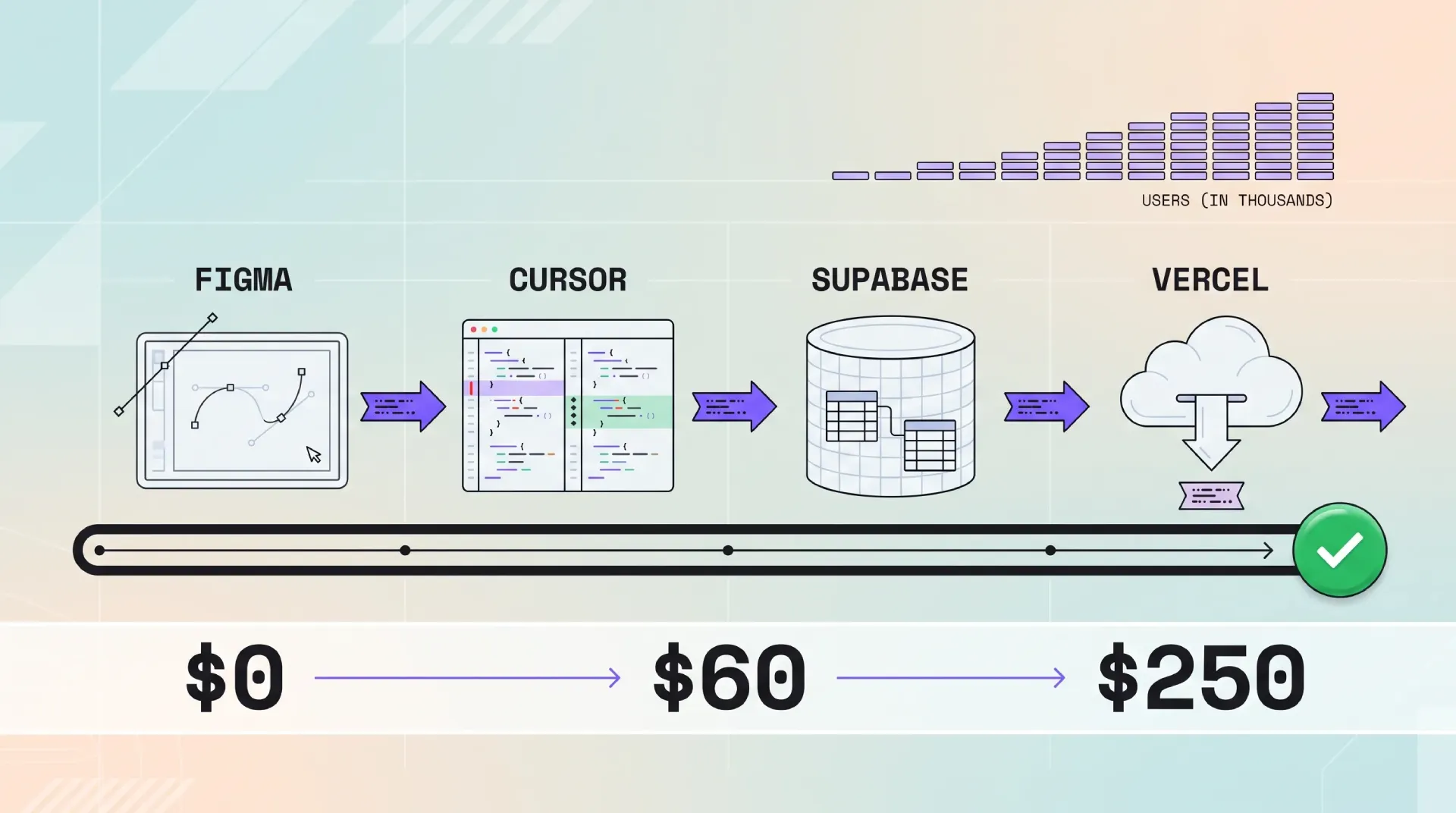
I am not a classical developer. I did not spend a decade in an IDE before AI arrived. I build landing pages and small internal tools with Cursor and Claude Code, so I learned this technique twice.
Once as a solo builder, and once from developers who said it is an old habit for them. The stack I run is the one I described in my solo founder tech stack.
Leave a failing test as the bookmark. This is the programmer's version, and it is older than the screenshot. You write the test for the function you have not built yet, watch it fail, and commit it as work in progress. "WIP, test for retry logic, impl tomorrow."
The morning starts red. There is one obvious job, make it green, and no decision about where to begin.
Leave a compile error or a TODO with a line reference. A comment like // TODO NEXT: wire the error state into retry(), see line 214 does something a vague note cannot. It points at a place. I can jump to line 214 and start.
Open a draft pull request with three lines: done, left, next step. It is a bridge for me tomorrow and honesty for anyone else reading the repo. The next-step line tells the next person exactly where the thread continues.
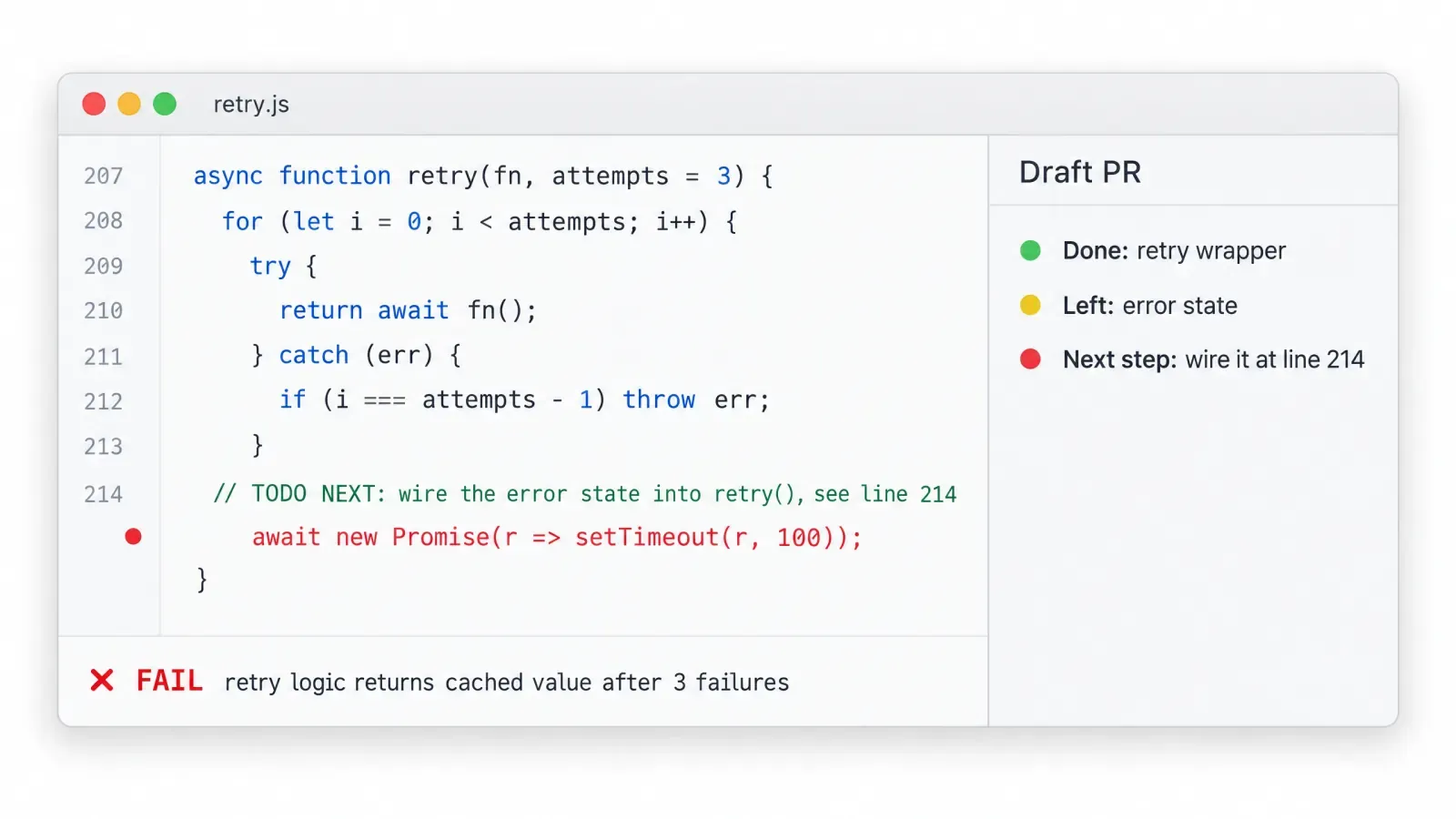
The AI-agent twist. My version differs in one useful way. An agent session is context I cannot hold in my head anyway. Half the value lives in the conversation, in the specific instruction that was working.
So I end the day by writing tomorrow's instruction into the agent's task file, or by leaving its last useful message as the next prompt. That bridge survives sleep better than my memory does.
Where it breaks: debugging. This is the clear exception. If I spent two hours building a mental model of state moving between three services, stopping mid-flow is expensive, and Gloria Mark's point about re-entry applies in full. The fix is not more hours.
It is unloading the context before I stop. "Hypothesis, a race between the worker and the cache. Next, add a log inside invalidate()." That note is the bridge, and then I stop at a clean point, not at peak concentration.
There is a social cost too. A half-finished function can block other people, so on shared code I close the branch or hand it over before I walk away.
The one pattern under all three
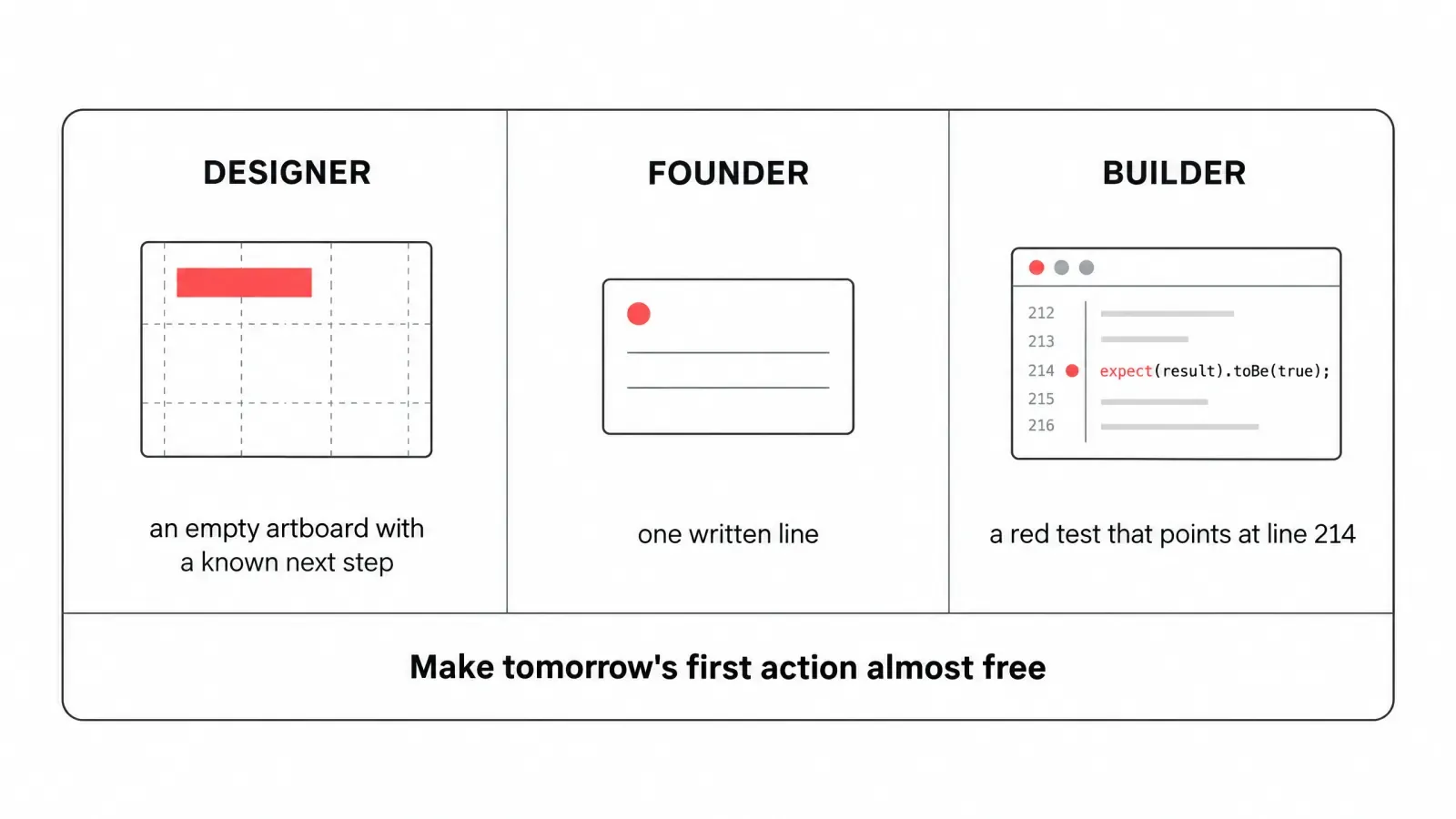
Strip the psychology away and one sentence is left. It was never "stop in the middle". It is "make tomorrow's first action almost free".
The designer's version is an empty artboard with a known next step. The founder's version is one written line. The builder's version is a red test that points at line 214.
If your work destroys expensive context when you walk away, or if open loops keep you awake, do not break off mid-flow. Unload the context into a note and stop at a clean point, with the next step written down. Nearly the same effect, fewer side effects. It is close to the habit behind avoiding burnout in middle age, where protecting sleep mattered more than one more hour of output.
My end-of-day protocol now
Modest on purpose, and it shifts with the week.
❶ Name the one main task, and bridge only that one.
❷ Write tomorrow's first action as a location, not a topic.
❸ Close or list everything else, so nothing stays open in my head overnight.
❹ For code, leave a failing test or a TODO that names a file and a line.
❺ For an agent session, write tomorrow's instruction into the task file.
Gemini was asked for one universal answer and it gave one. That format rewards confidence, so the nuance gets traded away. The Zeigarnik effect is borrowed for something it never claimed, and a chemistry metaphor gets bolted on to make the whole thing sound settled.
What is left when you take the science seriously is smaller and more boring. Lower tomorrow's first step to almost nothing, and write the step down. I watched the fancy version fail on the days I stopped inside my most expensive thinking.
The boring version is the one that worked, and I keep testing it in the newsletter.
Frequently asked questions
What is the Hemingway bridge technique?
Reportedly Ernest Hemingway stopped writing for the day in the middle of a sentence, at a point where he already knew what came next, so the next morning had no starting friction. The modern version is a productivity rule. End the session mid-task with the next step clear, instead of pushing to finish the block.
Does the Zeigarnik effect help productivity?
Mostly as a story, not as a mechanism. Zeigarnik's 1927 finding was about memory for interrupted tasks, and later replications are weak. When people write a concrete plan for the next step, the mental intrusion stops anyway, so the open loop is not doing the work. The benefit comes from a written next action.
Should you stop work mid-task?
Only when the next step is obvious, and preferably written down. Stopping inside a clear action lowers tomorrow's starting cost. Stopping inside expensive context, like debugging across several services, usually costs more than it saves. Match the decision to how expensive the re-entry is.
What should you write before ending a work session?
One action a tired version of you can start without thinking. A location, not a topic, so "finish the pricing block on publish.setproduct.com" beats "work on the site".
In code, a failing test or a TODO that names a file and a line. Keep it to one line and put it where you will see it first tomorrow.