
Roman Kamushken
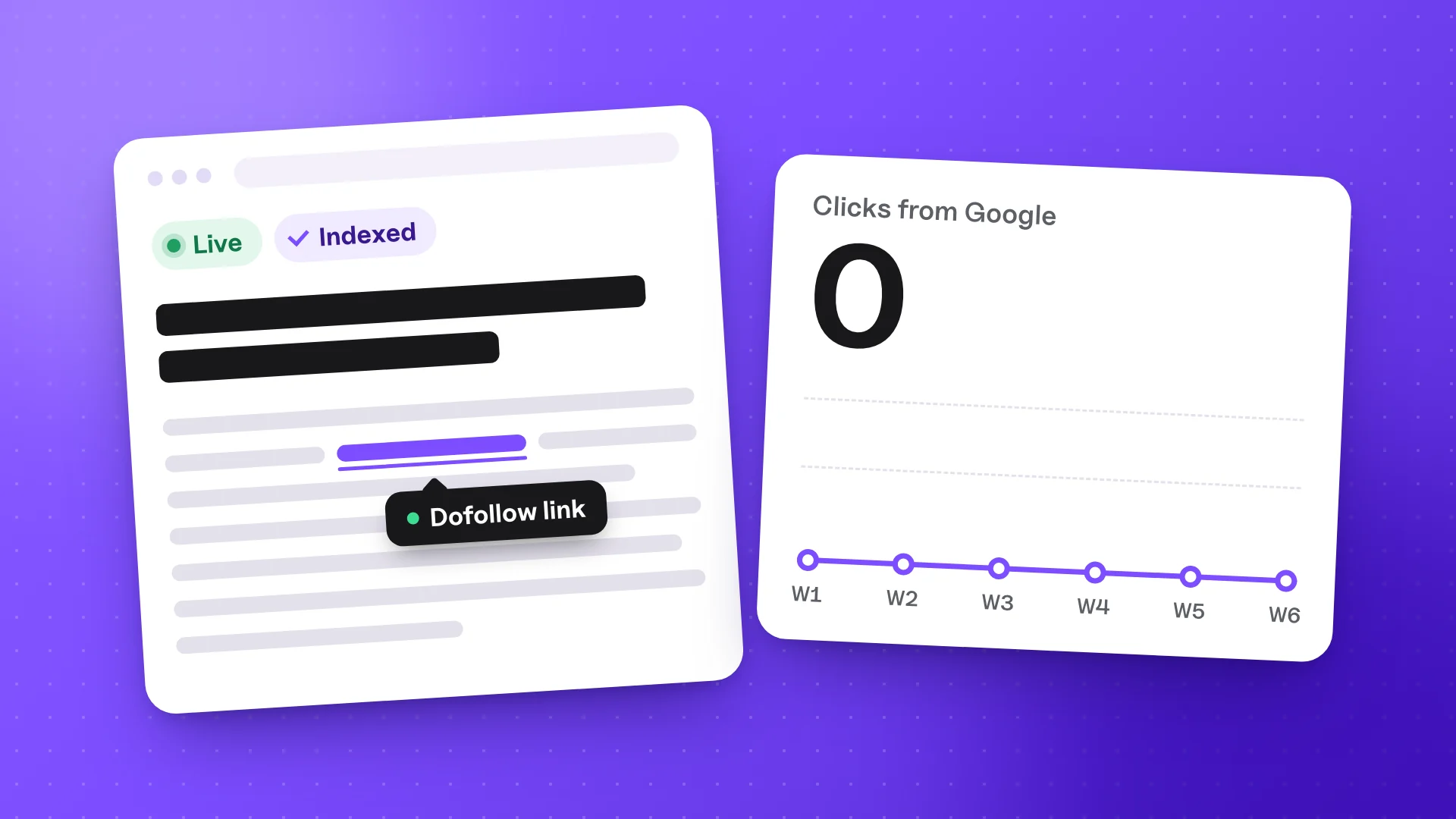
You paid for the placement. The post went live on a Tuesday with a working dofollow link, and a site: search confirms that Google indexed the page. Six weeks later, Search Console shows 0 clicks and a few dozen impressions for queries you never targeted.
So you type the question into Google: why is my guest post not ranking? The usual answers blame the link, either a low DR or slow indexing.
We run a blog with 17,000 monthly readers, and from the publishing side the picture looks different. The link is almost never the problem. The text answers no query that anyone types into a search bar, so Google has nothing to rank it for.
That is how a guest post with no traffic can sit next to a working link. The link did its job on the day it went live. The page around it never had a job.
Below are seven causes, each with a sign you can check yourself. After them comes the research protocol we run before the first line is written, so you can copy it or hand the work to us.
Is the guest post not indexed, or indexed and not ranking?
These are two different problems, and the first takes 2 minutes to rule out. Search for site: plus the full URL of the post.
If the page is still missing two weeks after publication, the cause sits with the host. Typical ones are a noindex tag, a canonical that points elsewhere, or a site Google crawls rarely because it publishes anything for money. Our list of red flags in guest post outreach shows how to spot that kind of site before you pay.
If the page is indexed and still gets nothing, keep reading. Some buyers try to fix this with a host that gets crawled faster, such as a site listed in Google News. Faster crawling solves discovery, and discovery was already working.
Seven reasons your guest post is not ranking
The causes stack, so check all seven signs before you settle on one.
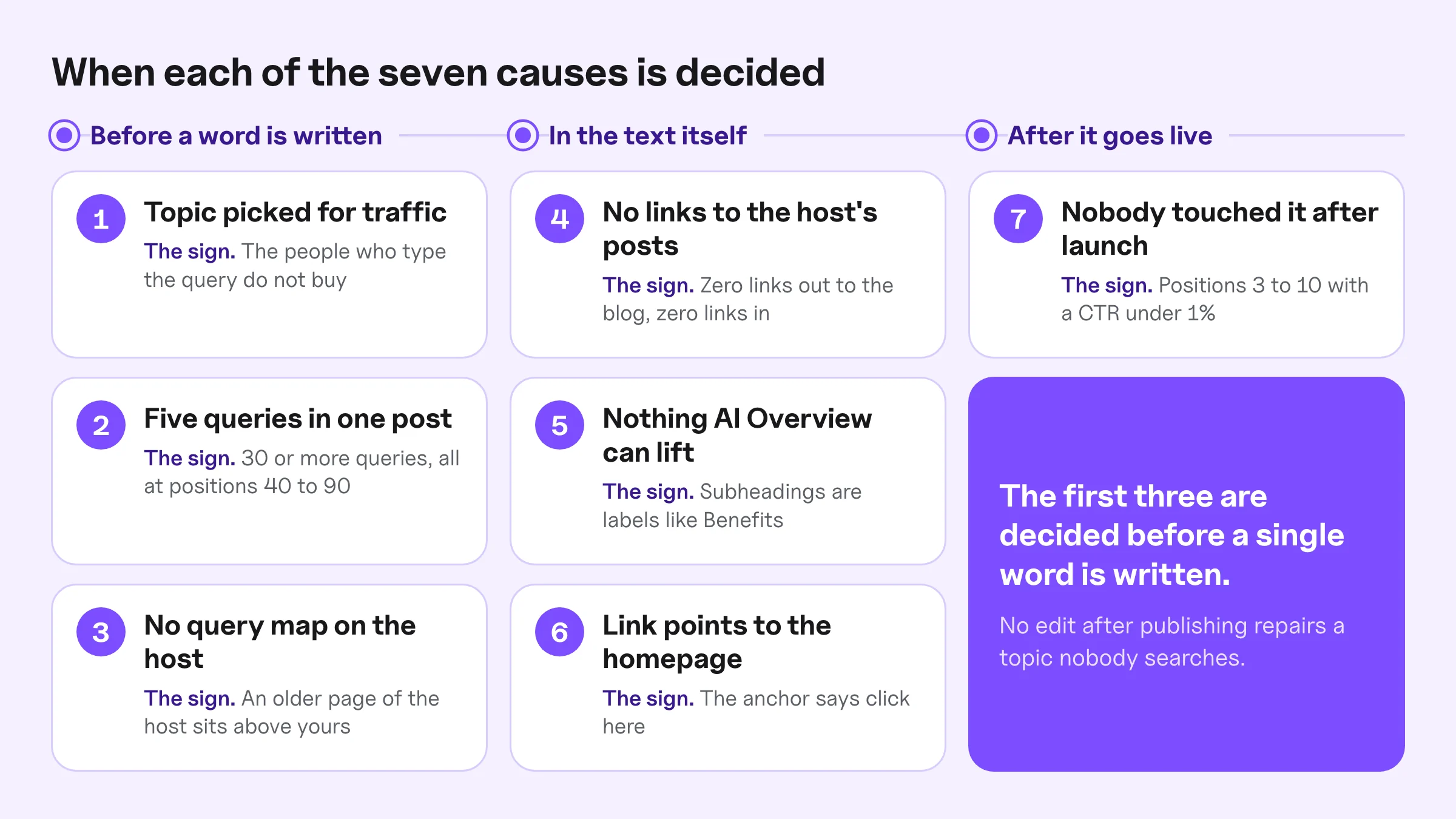
❶ The topic was picked for traffic, with no buyer behind it
A topic with 20,000 monthly searches looks like the safe choice. It attracts readers who want a definition, along with the large sites that already own that definition. A query with 200 searches from people comparing tools is harder to find, and it is the one a buyer types.
The sign. Read your target query aloud and ask who types it. If the honest answer is a student or a competitor's content team, the post cannot earn revenue even at position 1.
❷ One post tries to answer five queries and answers none
The brief said "cover everything about onboarding", so the text gives one paragraph to each subtopic. Google ranks a page for the query it answers best. A page that spends 150 words on each of five questions answers every one of them worse than a page devoted to a single question.
The sign. Search Console lists the post under 30 or more queries, all at positions 40 to 90, and no single query pulls ahead of the rest.
❸ Nobody mapped which page on the host owns which query
If the host already has a page ranking for your topic, your post splits impressions with it.
We made this mistake on our own blog. Five of our pages about guest posting competed for the same searches: 430 of 1,647 queries appeared on at least two of them. The cluster sat at average positions 11 to 29.
We have since assigned one query group to each page, and the result is still being measured.
The sign. Search site: plus the host domain plus your main keyword. If an older page from the same site appears above yours, the two are competing.
❹ The post links to nothing else on the host site
A guest post with one outbound link to the buyer and zero links to the host's other articles is an island. Internal links show Google where a page sits inside the site's topics, and they bring readers who are already on the blog.
The sign. Count the links in your post that lead to other articles on the same blog. Then count the host articles that link back to yours. Two zeros is your answer.
❺ There is no structure AI Overview can lift
For informational queries Google often shows an AI Overview above the regular results. It is assembled from passages, and the passages that get used are short and direct. That means a question in the subheading and a plain answer in the first two sentences under it.
Search Engine Land keeps a running library of AI Overviews coverage.
The sign. Your subheadings are labels like "Benefits" or "Overview", and no paragraph in the post could be quoted alone as an answer.
❻ The link points to the homepage instead of a product page
A reader who finishes an article about invoice automation and lands on a generic homepage has to find the invoice feature again. The link should continue the topic of the article on your side, which means a product or feature page.
The anchor should describe that page in plain words. Google's spam policies list guest posts with keyword-optimized anchor text among the examples of link spam, so write the anchor for the reader.
The sign. The anchor is "click here" or a bare brand name, and the target URL is your root domain.
❼ Nobody touched the post after it went live
The title and the meta description are still the first draft, and so are the images. Within weeks Search Console shows which queries the page gets impressions for, and they often differ from the plan. A post that is never adjusted to that data keeps its launch-day guesses.
The sign. The post has impressions at positions 3 to 10 and a CTR under 1%. People see it and do not click, which is a title and description problem.
☞ The first three causes are decided before a single word is written. No edit after publishing repairs a topic nobody searches.
Does guest posting still work for SEO?
Yes, when the post is built to rank for something. A guest post gives you two assets. One is the link, and the other is a page on someone else's domain that can hold a position and send readers for years.
When buyers say their guest posts are not working, they usually mean the first asset arrived and the second never did. We listed the outcomes of the channel, including the cases where it fails, in benefits of guest blogging. For the mechanics of links themselves, start with the Ahrefs link building guide.
What does a guest post that ranks look like?
We have no client results to show for Delegate yet. What we can show is our own blog, where we apply the same method to our own pages.
In the six months to October 10, 2026, setproduct.com got 18,711 clicks from Google, up from 13,205 in the six months before. Average position moved from 14.0 to 11.9. Three posts show the method at work.
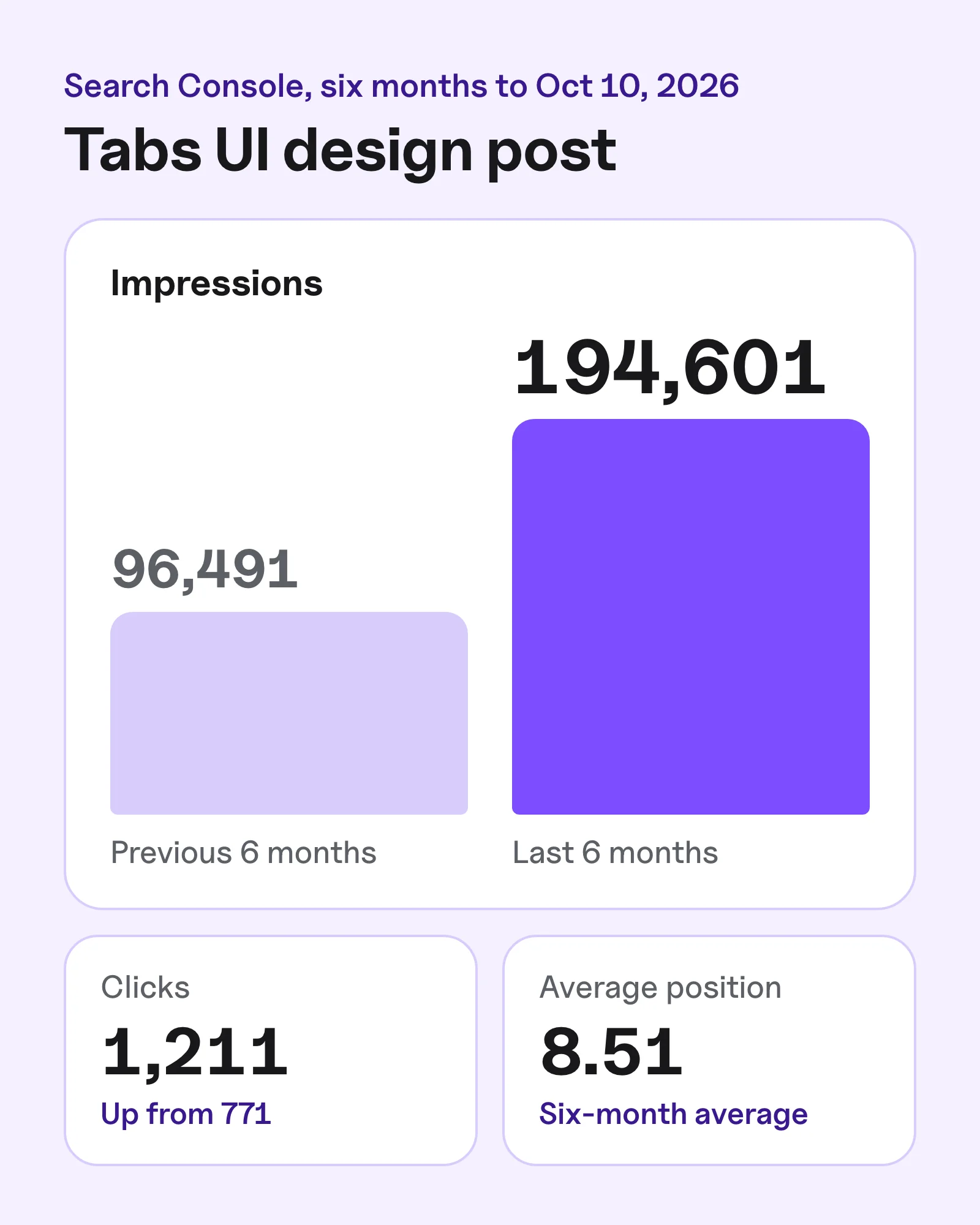
A component guide that doubled its impressions
Tabs UI design rules, and when tabs quietly fail collected 194,601 impressions in the six months to October 10, 2026, at an average position of 8.51. The previous six months brought 96,491. Clicks rose from 771 to 1,211.
The post opens with a definition a reader can quote, followed by a short summary. Its subheadings follow the order of a designer's questions, starting at anatomy and ending at a checklist to run before shipping. One section is a table that compares tabs with three neighbouring components, and the post closes with 12 FAQ answers.
One query owns the page. Every sub-question belongs to a reader who arrived with that same query, which is the opposite of cause 2.
A pillar that replaced a page nobody clicked
Dashboard UI design, layout patterns and examples that convert went live in early June 2026. It replaced an older URL that had a 64-character slug stuffed with keywords and a CTR of 0.022%.
The new page opens with a short definition under the question "What is a dashboard?". It links to 14 other posts on our blog and closes with 8 FAQ answers. In the three months to October 6, 2026, it averaged position 8.89 with 21,499 impressions and 66 clicks.
66 clicks is a small number, and we show it on purpose. A new page spends its first months collecting impressions before clicks follow.
A post that ranked third and got zero clicks
Guest posts vs niche edits, which link type to buy in 2026 is our own example of cause 7. Between April 11 and October 10, 2026, it held positions 3.4 and 4.1 for its two main comparison queries. Those two queries brought 4,219 impressions and 0 clicks.
The page as a whole had 38,454 impressions, 74 clicks and a CTR of 0.19%. The snippet failed to answer the question behind the query, which is "which one should I pay for first".
Our reading is that an AI Overview or a featured snippet took the click, and Search Console cannot confirm that part. On October 12 we rewrote the lead to answer first, then added a three-point summary and a decision table with four link types. The effect has not accumulated yet, and we will update the figure here once a full month of data is in.
The protocol we run before the first line
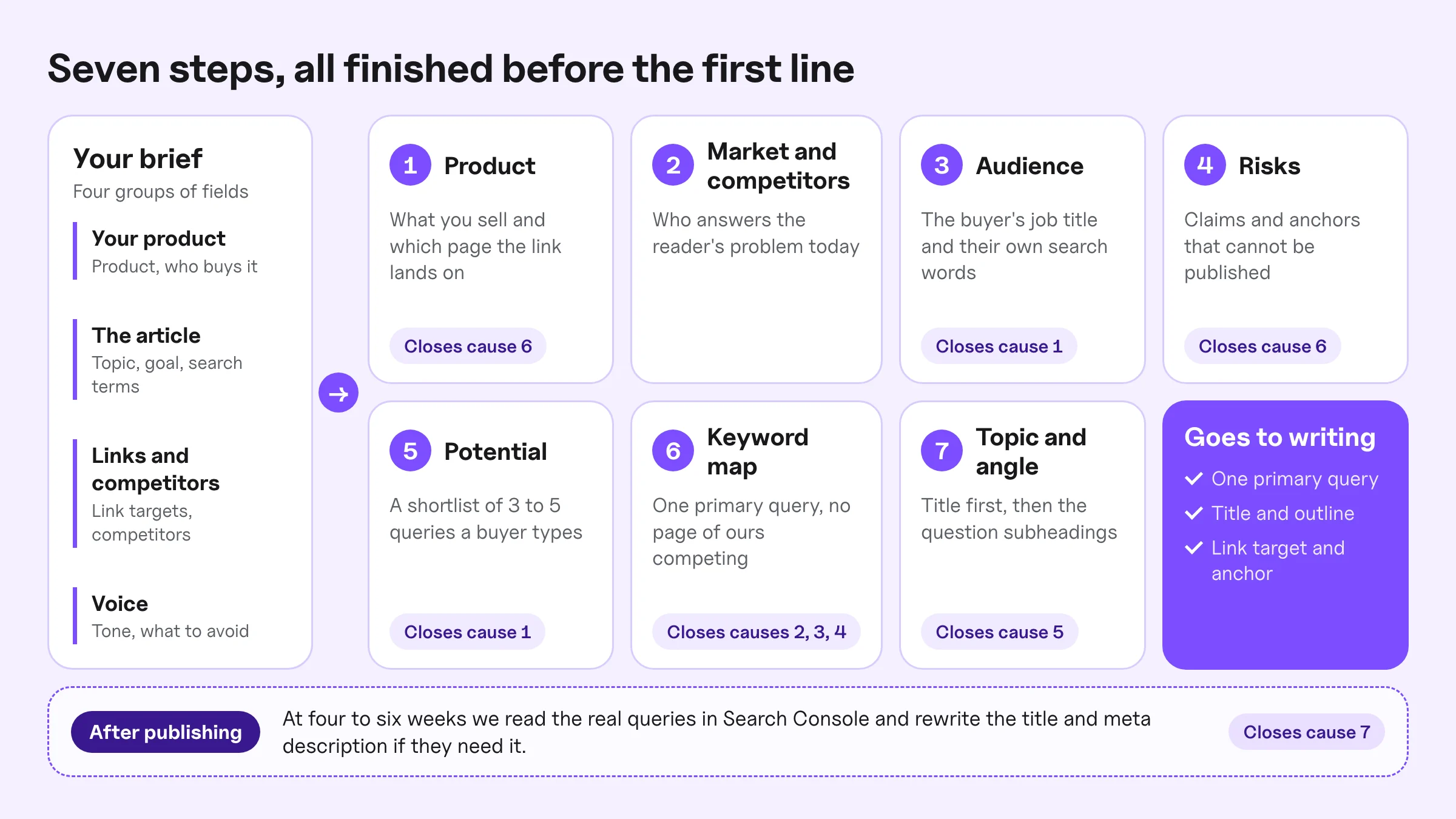
Every cause above is a research failure that surfaced after publishing. The Delegate plan moves that research to the front. It takes seven steps, all finished before writing starts.
Our team researches your product and writes the article. We use AI actively to speed up research and first drafts, and a human checks every fact before the draft reaches you.
The inputs come from your brief, which has fields for the product, the buyer, the goal, your links and your competitors. A separate check after publishing handles the last cause.
❶ Product
We start with what you sell and what a reader should do after the article. We read the pricing page and the docs, then pick the one feature the article can show without overstating it.
→ Example question. "Which page should a buyer land on, and what do you want them to do there?"
→ What we do next. The answer fixes the link target and the anchor before writing starts.
Closes cause 6. The link lands on the page that continues the article.
❷ Market and competitors
We list who else answers the reader's problem, meaning direct competitors plus the pages that hold the search results today. The brief asks for one to three competitors to mention or avoid, and we follow up with one question about them: which competitor do buyers compare you with most often, and where do you win that comparison? From the answers we mark the queries where strong pages already hold the top results, and the ones where current answers are thin.
❸ Audience
"Marketers" is too wide to write for. We want the job title of the buyer and the moment they start searching, in their own words.
→ Example question. "What did your last 3 customers type into Google before they found you?"
→ What we do next. Their wording becomes the seed list for the keyword map, in place of the vocabulary from your marketing pages.
Closes cause 1. The seed words come from buyers, not from marketing pages.
❹ Risks
Some claims cannot go into a published article, such as unreleased features or comparisons your legal team has not cleared. We also check the topic against the subjects we turn down: gambling, CBD, adult content, illegal substances, hate speech, spam.
→ Example question. "What must this article never say about you or about a competitor?"
→ What we do next. The answers become a list we run the draft against before you see it. Anchors written for keywords go on the same list, because Google treats them as link spam.
Closes the anchor side of cause 6. The anchor describes the page in plain words.
❺ Potential
We weigh search demand against the strength of the pages that rank now, then ask how close the query sits to a purchase. A query where we cannot reach page one is dropped at this step, and you settle one trade-off for us: 2,000 curious readers, or 150 who are choosing a tool this quarter. What survives is a shortlist of 3 to 5 candidate queries, and we discard the rest.
Closes cause 1, together with step 3. Only queries a buyer types survive the shortlist.
❻ Keyword map
Each candidate query is checked against our own blog. If one of our pages already ranks for it, a second page would compete with the first.
1. We list the queries our blog already holds and ask ourselves which gap this article fills.
2. Your article gets one primary query with its sub-questions.
3. We choose the existing posts that will link to it.
Closes causes 2, 3 and 4. One primary query per article, no page on the host competing, and older posts linking in.
❼ Topic and angle
Only now do we choose the topic. The angle is the reason someone would read this article when ten others exist.
1. We write the title first, then the question subheadings.
2. We write the opening answer and test it with one question: if a reader remembers one sentence of this article, which one should it be?
3. The outline goes to writing, and the finished draft goes to you for one round of edits.
Closes cause 5. Question subheadings with direct answers are in the outline from the start.
After publishing
This loop starts once the post is live and runs separately from the research. Four to six weeks after publishing, we open Search Console and read the queries the page actually gets. If it sits at positions 3 to 10 with a CTR below 1%, we rewrite the title and the meta description for those queries, free of charge and with no time limit.
Closes cause 7. The post stops carrying its launch-day guesses.
This same check at four to six weeks is how we answer for the top 10 goal, so it is included in the price and never sold separately.
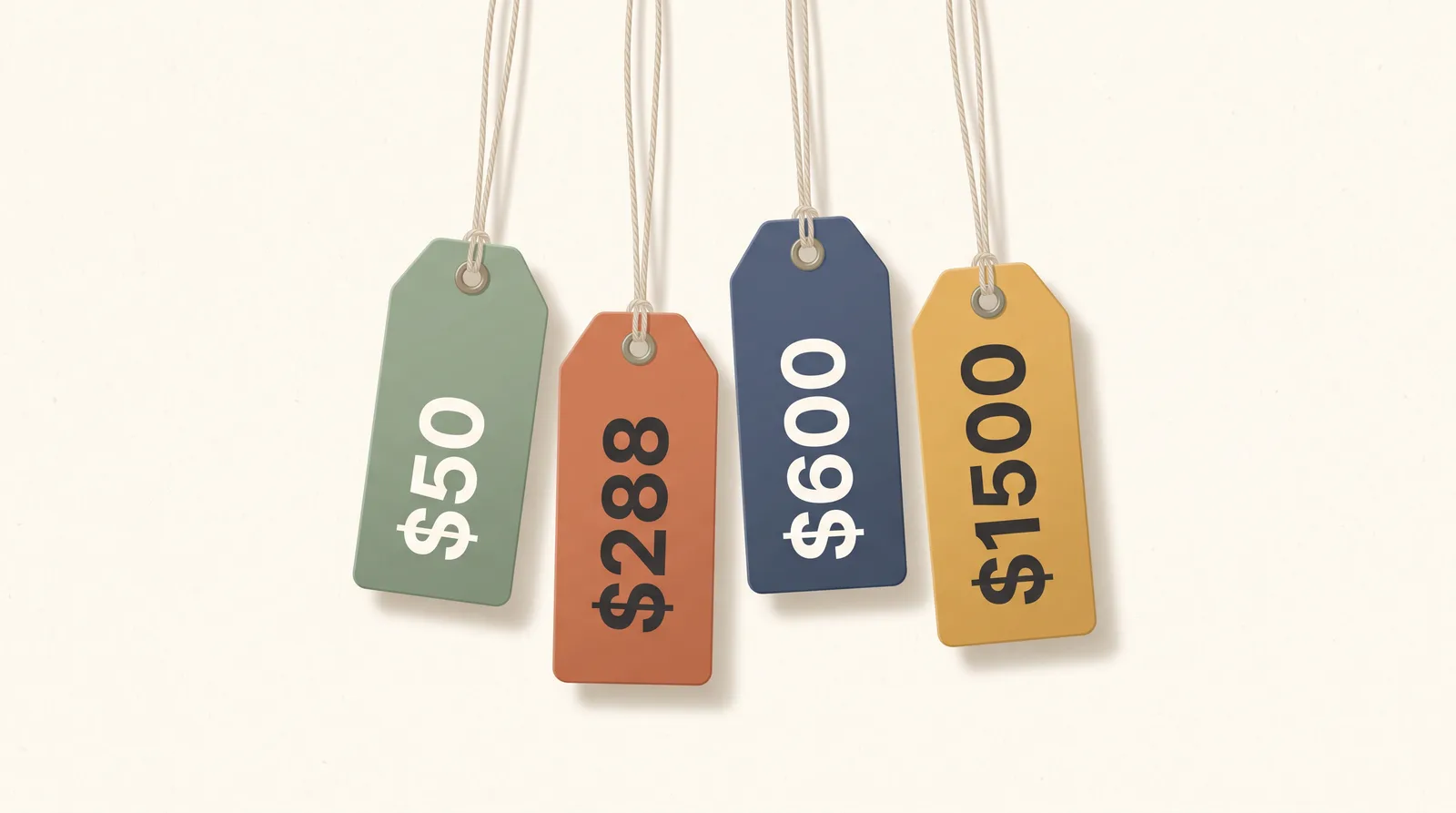
Why this is the difference between $390 and $890
Both plans end with a published post and dofollow links on the same blog. The difference is who answers for the topic.
On Accelerate, at $390, you bring a finished draft. The topic and the structure are yours, and we publish within 24 hours with 1 dofollow link. Maximize, at $490, works the same way with more reach and a 4-hour turnaround.
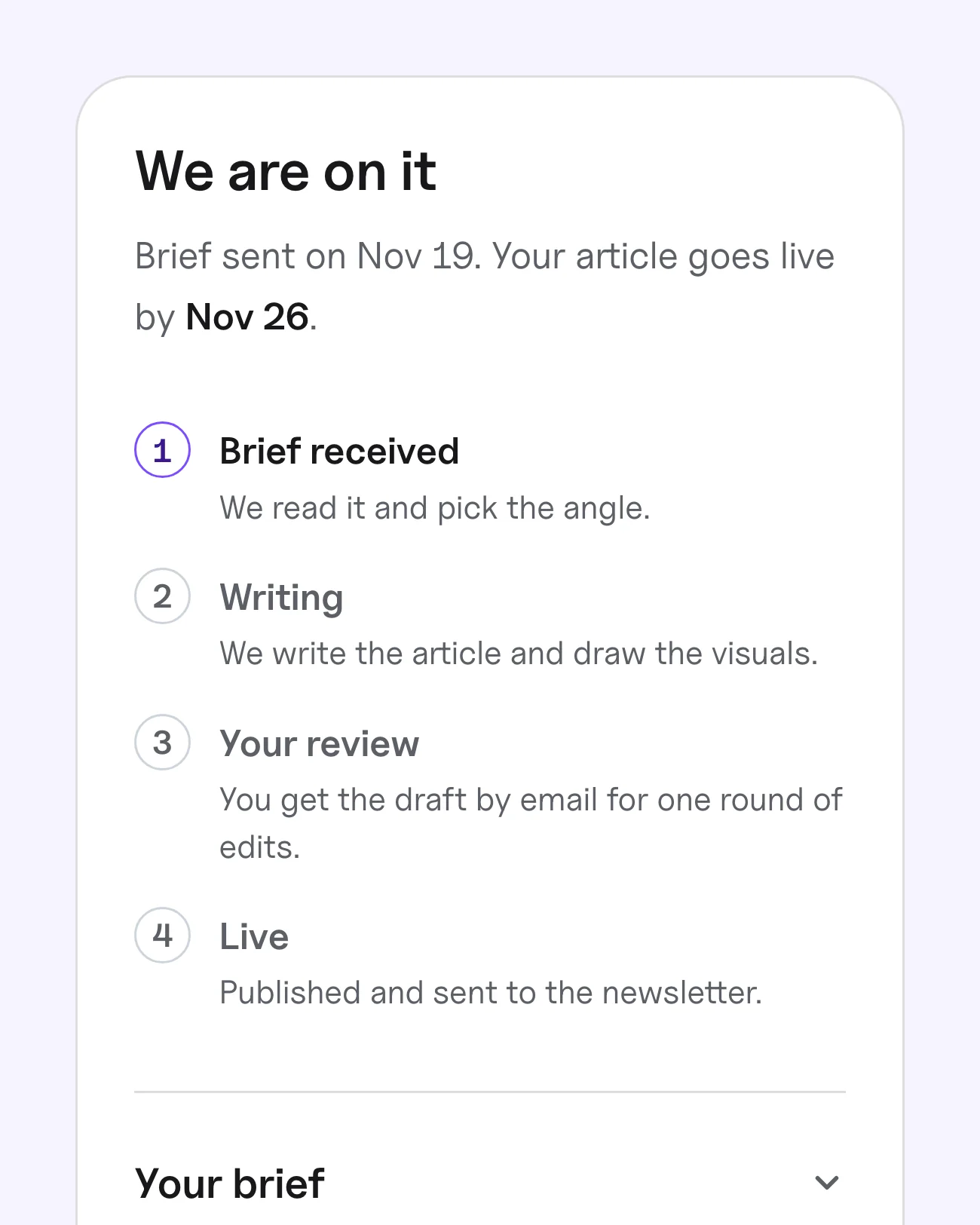
On Delegate, at $890, the topic choice is our responsibility. You send a brief and we run the seven steps. Then we write the article with its visuals and publish within 7 days of the brief.
| Plan | Accelerate | Maximize | Delegate |
|---|---|---|---|
| Price per article | $390 | $490 | $890 |
| Who writes | You | You | We do |
| Who picks the topic | You | You | We do, from your brief |
| Length | Up to 3,000 words | Up to 5,000 words | Up to 2,500 words |
| Dofollow links | 1 | 2 | 2 |
| Placement | Blog | Blog and homepage | Blog and homepage |
| Newsletter to 7,000 subscribers | No | Yes | Yes |
| Cover and inline visuals | No | No | Yes |
| Live in | 24 hours from the draft | 4 hours from the draft | 7 days from the brief |
The word limit on Delegate is lower because our hours go into the research and the visuals instead of extra length.
The $500 between Accelerate and Delegate pays for the research and the writing. If you already have a keyword map and a writer who follows it, Accelerate is the right plan, and Delegate would be money spent twice.
Market pricing for placements is a separate subject, covered in how much a guest post costs in 2026.
What we guarantee and what we do not
Two things are guaranteed on every plan, and both are written into our terms.
→ Publishing on time. For Delegate that means 7 days from the moment we have your brief. Payments are final and we do not issue refunds, so the deadline is what we answer for.
→ Google indexing. It usually happens within 48 hours of publication. Indexing is the part we control.
Rankings work differently, because no publisher controls them. What we work toward on Delegate is the top 10 for the query the keyword map assigns to your article. That is the goal, and it is the result we expect in most cases.
It does not mean position 1, and it comes with no date.
There is one exception we state upfront. In large markets that established sites divided years ago, a general query is out of reach for a single article. There we recommend narrower queries with weaker competition and build the article around those.
☛ The post stays live permanently, and changes to the text or a link after publishing are free. Beyond the check at four to six weeks, if a few months of Search Console data show that the meta information or the headings need small edits, we are ready to make them.
What we do not have yet
Delegate is a new plan. It has no public client cases, so this article contains no testimonials and no client growth figures. We would rather say so than borrow a number.
What we have instead is two things you can inspect. The first is our own blog, with public posts and figures taken from our own Search Console.
The second is the protocol, published here in full. If you follow the seven steps with your own writer, you need nothing from us. Until client results exist, judge the method by the pages it produced for us.
Frequently asked questions
❶ How long does a guest post take to rank?
Indexing usually happens within 48 hours of publication, and positions take longer. On our own blog, a pillar published in early June 2026 averaged position 8.89 across the three months to October 6. Six weeks is too early to judge a post, so plan in months and read Search Console monthly.
❷ What if the topic we want is already taken?
Then we do not write it a second time. If our blog already has a page that holds the query, a new one would split impressions between the two. If large sites hold the results, we choose a narrower query with weaker competition and explain the choice in the draft.
❸ Can I bring my own topic?
Yes, the brief has a Topic field for that. We still run your topic through the seven steps. If the research shows it targets a query nobody searches, or one our blog already covers, we adjust the angle and explain why in the draft you review.
❹ What does the round of edits cover?
One round, before publishing, on the draft we send by email. Put every comment into a single reply, covering product facts, wording, link targets and anchors. After the post is live, changes to the text or a link stay free of charge.
❺ How is Delegate different from hiring a freelancer?
A freelancer delivers a text, and you still need a place to publish it. Delegate adds the research and the visuals, then publishes the article on a blog with 17,000 monthly readers and DR 42 and sends it to 7,000 newsletter subscribers. You get one price of $890 and one deadline, 7 days from the brief.
What to do with the post you already paid for
Go back to the post from the first paragraph, live and indexed for six weeks with 0 clicks. Run the seven signs against it.
For the next post, do the research before the writing. Copy the protocol above and run it with your own team. Or send us a brief: on Delegate we research your product and pick the topic, then write up to 2,500 words and publish within 7 days for $890.
Publishing on time and indexing are guaranteed. Page one is the goal.